
Most capsule wardrobe guides read like a mood board: a beige trench here, a perfect white tee there, maybe a pair of loafers. They photograph beautifully. They also assume your mornings look like a Pinterest pin. Mine do not. Mine involve a dog who needs walking before 7 a.m., a toddler who insists on being carried, and a coffee machine that is slower than it should be. A capsule wardrobe, in that context, is not a style exercise. It is a survival strategy.
I have been iterating on my own capsule since the autumn of 2023. I started with the classic 33-piece formula, then went down to 25, then 20, and finally landed on twelve. Twelve is the number that actually held up across work days, weekends, school runs, train trips, and the occasional funeral. Below is what I use, what I have changed my mind about, what to skip, a brief history of how we got here, and an honest summary of whether twelve is even the right target.
What I actually use
The list below is what is in my wardrobe right now, in September 2026. I am a 38-year-old man who works a hybrid office job, lives in northern France, and dresses for weather that swings from 4°C mornings to 22°C afternoons in the same week. Prices are what I paid, in euros, in 2025 and 2026.
1. A charcoal wool overcoat (COS, €320). The single most-worn item in my closet, by a wide margin. COS cuts it long enough to wear over a sweater, short enough that I am not tripping on it at the school gate. The wool is thick but not heavy. I have worn it on maybe 180 days since I bought it in October 2024.
2. A navy merino crewneck (Uniqlo, €39.90). I own three, in rotation. They survive the washing machine, do not pill the way cheaper knits do, and look fine under a blazer or on their own with jeans. I used to think merino was overpriced for what you got. I was wrong.
3. A faded black selvedge denim jean (A.P.C. New Standard, €185). I bought these in 2022 and they are now the only jeans I wear. Selvedge denim ages in a way that regular denim does not — the fades look intentional rather than worn out. They also fit me better than any other pair I have tried.
4. A pair of off-white chinos (L'Estrange, €145). These replaced two pairs of chinos I owned that I never wore. The fabric has a small amount of stretch, which sounds like a marketing line until you spend a day chasing a toddler and realize that rigid cotton is a punishment.
5. A cream oxford button-down (Brooks Brothers, €130 on sale). The non-iron version is the only kind worth buying. I machine wash it, hang it damp, and it is wearable in 90 minutes. I own two and rotate them.
6. A grey marl t-shirt bundle (three pieces, Colorful Standard, €45 each). Heavyweight cotton, generous cut, no logos. They have replaced most of the cheaper tees I used to own and they wash better. Three is the magic number — enough to get through a week without doing laundry.
7. A black merino polo (Uniqlo, €29.90). For days when a t-shirt feels too casual but a button-down feels like effort. I was skeptical of the price point. It has held up for two years.
8. A pair of dark brown Chelsea boots (Blundstone, €219). These replaced a pair of Common Projects I sold because they were too precious to actually wear. The Blundstones are not as beautiful. They are also waterproof, resoleable, and have survived two winters.
9. A pair of white leather sneakers (Adidas Stan Smiths, €119). The most boring choice on this list, which is exactly the point. White sneakers have been "done" since 2014 and they will still look acceptable in 2034.
10. A packable rain shell (Patagonia Torrentshell, €199). Not a fashion piece. A piece of equipment. I keep it in my work bag every day between October and April.
11. A thick lambswool scarf in camel (Johnstons of Elgin, €85). I bought this on a trip to Edinburgh in 2019 and it is still going strong. Lambswool is warmer than merino for the weight and it does not itch.
12. A canvas tote in olive (Baggu, €40). Replaced a leather messenger bag I used to schlep to the office. The tote fits a 13-inch laptop, a packed lunch, and a child's raincoat. It is also the only bag I take on weekends.
That is twelve pieces of clothing. I also own underwear, socks, gym shorts, pyjamas, and a couple of technical outdoor jackets, but they do not count toward the capsule. The capsule is the decision layer — the twelve things I am choosing between on any given morning. Everything else is invisible infrastructure.
What I have changed my mind about
A few beliefs I held in 2023 that the last two years have killed.
I used to think a capsule had to fit in a carry-on. That is great for travel, but it is a terrible target for daily life. The point of a capsule is to remove decisions, not to be ready to flee the country at any moment. A carry-on capsule is a holiday costume. A real capsule is what you wear to the school pickup.
I used to think I needed variety in color. For about six months in 2024, I tried to wear mostly black. Then I went through a phase of pushing cream and beige. Both looked fine, but neither felt like me. The current capsule is what I would describe as "adult neutrals": navy, charcoal, cream, faded black, brown. The colors are calm, but they are not a uniform.
I used to think expensive meant better. Two items on the list above cost over €300. The rest cost under €150. The expensive items — the COS overcoat and the A.P.C. jeans — have held up better than anything else I own. The cheaper items have also held up surprisingly well. The failures were almost always in the €60–€100 range, where you pay for a brand name without the materials to back it up.
I used to rotate seasonally. Capsule purists will tell you to swap your wardrobe in and out every three months. I tried that in 2024 and hated it. Now I keep summer and winter items in the same closet and just push the off-season pieces to the back. Twelve is not "twelve all year." It is twelve in active rotation, with three or four pieces swapped in or out as the weather shifts.
I used to think a capsule was about discipline. It is actually about giving yourself permission to stop thinking about clothes. The real win is not that I look better. It is that I have not thought about what to wear on a weekday morning in over a year.
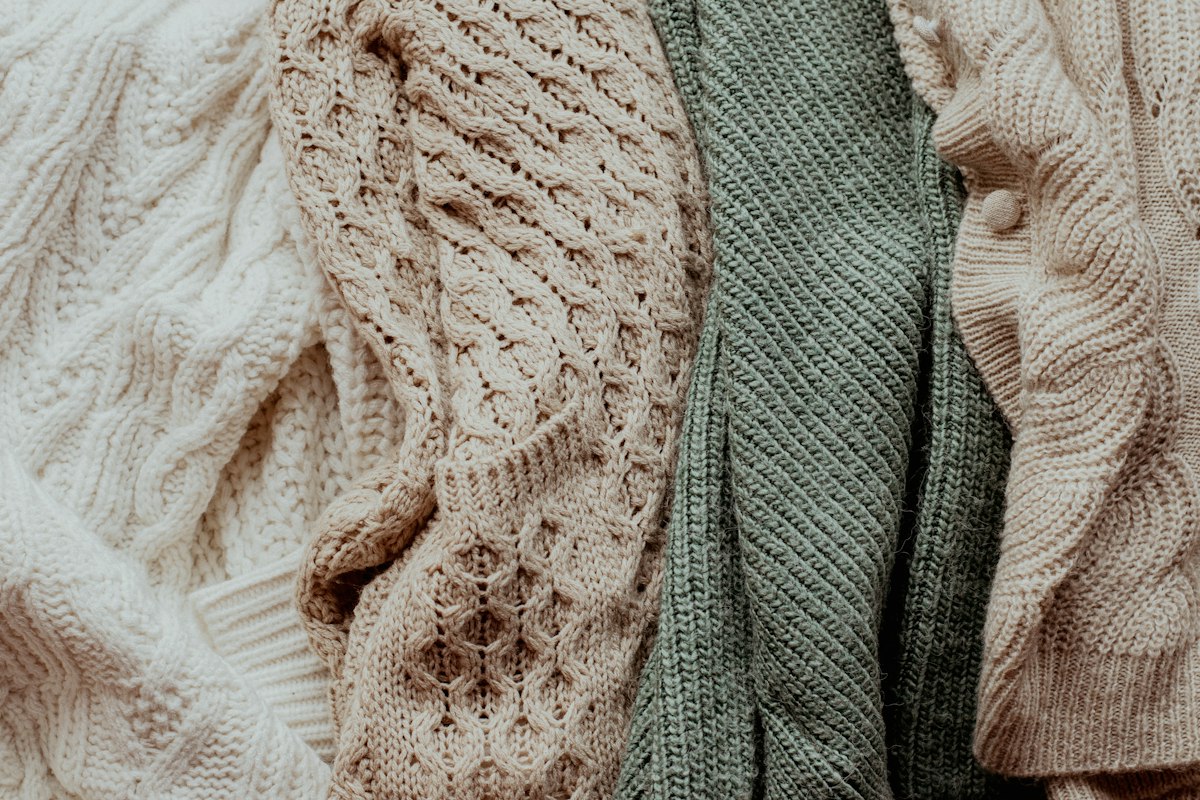
What to skip when building your capsule
If I were advising a friend who wanted to build their first capsule in 2026, I would tell them to skip these categories entirely at the start.
Statement pieces. The oversized printed shirt, the bright patterned trousers, the loud cardigan. You will wear them twice, then feel awkward every time. Keep them in the back of your closet if you must, but do not let them into the capsule.
"Just in case" pieces. The blazer you might need for an unexpected wedding. The dress shirt in case you get promoted. Most of these events never come, and when they do, you can borrow, rent, or buy something specific. A capsule that plans for every hypothetical is not a capsule.
Trendy cuts. Wide-leg trousers, drop-shoulder sweaters, micro-shorts. By the time you have worn them twice, the trend has moved and they look dated. Stick to cuts that have been around for at least ten years: straight-leg jeans, crewneck knits, oxford shirts.
More than two pairs of shoes. I have four in active rotation: Chelsea boots, Stan Smiths, a pair of hiking boots for weekends, and rubber rain boots for the dog. Anything beyond four pairs is, for me, clutter. Choose shoes that work in at least three different outfits.
Anything that needs ironing. I have a small child and a job. I do not iron. If a piece cannot survive a wash-and-hang cycle and look acceptable, it does not enter the capsule. This rule alone cut my wardrobe in half.
Cheap accessories. A €12 leather belt looks like a €12 leather belt. A €15 scarf looks like a €15 scarf. Two or three accessories, bought well, will outperform a drawer full of cheap ones every single time.
The history
The capsule wardrobe is not a new idea. Susie Faux, a London boutique owner, coined the term in the 1970s to describe a small collection of essential, versatile pieces that did not go out of fashion. She was not aiming for minimalism as an aesthetic. She was responding to the fast-fashion boom of the late 1960s and the increasingly disposable relationship women had with their wardrobes.
The idea went mainstream in 1985 when Donna Karan launched her "Seven Easy Pieces" collection — a system of interchangeable garments built around a single black bodysuit. Karan was designing for working women who needed to look professional without spending hours on their clothes. The collection was a commercial hit and made "capsule" a household concept in fashion.
Through the 1990s and 2000s, the idea drifted in and out of style. It came back hard in the early 2010s with the minimalist movement — the capsule became associated with Marie Kondo, with "no-buy" challenges, and with a specific aesthetic of beige, cream, and oatmeal. That aesthetic was beautiful, but it was also restrictive. A lot of people tried to live inside it and felt like they were wearing a uniform that did not belong to them.
The 2020s version, the one I am practicing, is a little messier and a lot more honest. It is less about purity and more about decision fatigue. We have more clothes than any generation in human history, more ways to buy them, more algorithms telling us what to wear. A capsule in 2026 is a way of pushing back against that. Not as an aesthetic choice, but as a practical one. You do not adopt a capsule because you love beige. You adopt it because you are tired of standing in front of a full closet and feeling like you have nothing to wear.
That, to me, is the part of the history that matters. The capsule is not a look. It is a tool.
The honest summary
Twelve pieces is not a magic number. If you need twenty, build twenty. If you need eight, build eight. The point is not the count. The point is that you know every piece, you reach for it without thinking, and you can dress for 90% of your days without opening a catalog app.
What works for me: a narrow color palette built around neutrals I actually like wearing. A few pieces that cost more because they will outlast everything else. Almost everything else bought at a price I would not cry about if it got ruined. No ironing. No seasonal swaps. No "just in case" pieces.
What does not work for me, and may not work for you: the idea that a capsule should look a certain way. The Instagram capsule is a lie, or at least a curated snapshot. Real capsules get stained. They get worn at the school gate. They get slept in by accident. The point of a capsule is not that it looks beautiful on the bed. The point is that it disappears into your life.
Two years in, I am still iterating. The overcoat will probably stay for another decade. The tote may get replaced when the strap finally gives out. The polos may end up in a box if my style shifts. That is fine. The capsule is not a museum. It is a wardrobe that works. And for the first time in my adult life, mine does.