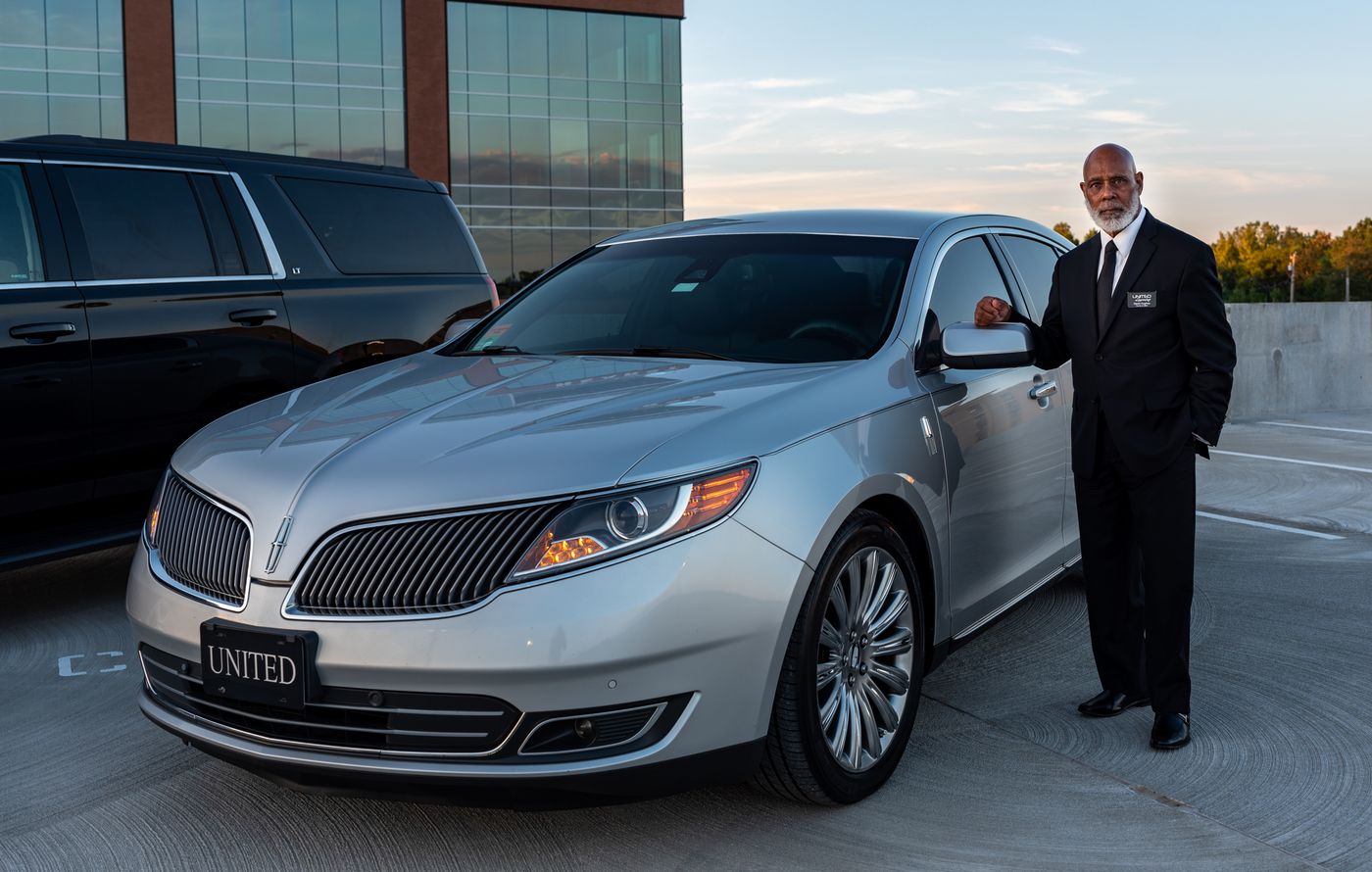
There is a specific moment at the end of a long-haul flight that almost every traveller knows. The cabin lights come up, the overhead bins are already full of other people's coats, and you have ninety minutes to gather a passport, one carry-on that has been "fine" for eleven hours, and whatever is left of your patience.
Then comes the question that ruins the mood faster than the jet lag: how exactly are you getting into the city?
Because in New York, that answer is genuinely hard. The taxi line is long and the queue moves at the speed of somebody else's argument with the dispatcher. The rideshare surge that greets you at 6:40pm is always higher than the surge you were quoted before you landed. And the shuttle van that looks cheap on the app charges you again for luggage, for a second passenger, and for the toll bridge you crossed at exactly the wrong hour.

This is the case for the third option — a prearranged transfer, where your ride is booked before you ever board, your chauffeur is waiting with your name, and the entire cost of getting from the airport to your hotel is settled in one clean transaction. It is the option most frequent New York travellers quietly default to once they have tried it once.
Here is how the option actually works, what it costs, and where Carmel Car & Limousine fits into it.
What a prearranged transfer actually is
The term sounds more formal than it is. Strip away the industry language and a prearranged transfer is simply a private car and driver reserved for a specific person at a specific time.
That single sentence contains the entire advantage. A rideshare is a marketplace auction between a driver and you, happening in real time, priced by supply at the exact minute you open the app. A street hailer is a negotiation with someone who has just worked a fourteen-hour shift and will quote you whatever the moment allows. A prearranged transfer is a fixed reservation. The price is agreed before you land, the vehicle is confirmed, and the driver already has your name and flight number.
In practical terms, that means three things you cannot get from the other two options:
Your ride is there when you walk out. The chauffeur tracks your flight. If the flight is delayed three hours, the car shifts three hours with it. You are never standing at arrivals at midnight wondering whether your booking quietly evaporated while you were over the Atlantic.
The price is the price. You know what the trip costs before you pack. There is no surge multiplier, no meter running while you sit in traffic, and — critically in New York — no ambiguity about who is paying the bridge and tunnel tolls.
The luggage is your luggage. Four suitcases and a garment bag is a normal request, not a negotiation that ends with you carrying one bag on your lap. This is the single most underrated advantage of booking for a vehicle rather than a seat.
See Current Carmel Rates for NYC Airports →
Why New York is the hard case
Most cities are not really contested ground. In most places the choice between a rideshare, a cab and a prebooked car is a small calculation about price and convenience, and the wrong answer costs you twenty minutes.
New York is different for three specific reasons.
The first is scale of distance. JFK sits roughly sixteen miles from Midtown, LaGuardia barely nine, and Newark is a different state entirely. A nine-mile trip can cost meaningfully more than a sixteen-mile one once tolls and traffic are factored in, which makes "I'll just hail a cab" a surprisingly expensive sentence.
The second is congestion pricing and toll infrastructure. Manhattan is ringed by crossings that charge, and the cost depends on when you cross. A quote that includes tolls is a meaningfully different product from one that does not, and it is worth being deliberate about which you are booking.
The third is supply. Airport taxi queues are metered by physical space, and during a bank of simultaneous arrivals that meter runs out. The practical result is that the "efficient" option is often anything but.
Choosing the right vehicle
The most common booking mistake is reserving something too small, because the price difference seemed worth it at the moment of booking and then defined the entire trip.
Executive sedan — the default, and correct for one or two passengers with normal luggage. This is the right answer for a solo business trip or a couple travelling light.
SUV — worth the upgrade whenever you are packing for four-plus days or carrying ski or golf equipment. The extra cargo volume matters more than people expect.
Minivan — the family option. Six passengers, all the strollers and car seats, and nobody in the group sitting on a suitcase.
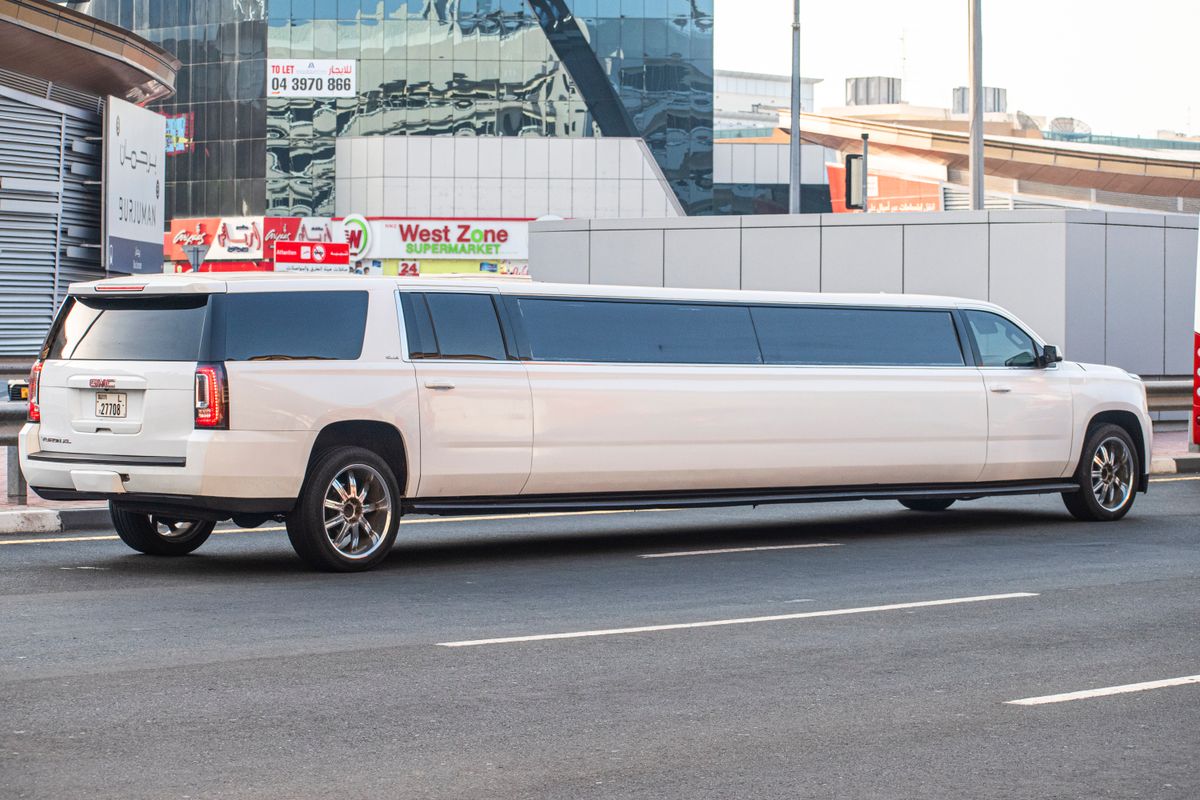
Stretch and super-stretch limousine — the celebratory option, and genuinely the best-value vehicle on the list if you have a group of six to ten. A limo that would be excessive for two people is simply efficient for a wedding party or a birthday group, because everyone rides together and the cost is shared across the car rather than doubled across two cars.
Large passenger van — the one most people forget to ask about, and the most useful for anything involving a group plus equipment.
Where Carmel fits
Carmel has been running chauffeurs in New York since 1978, which matters more than it sounds. Ground transportation is not a business where being new is neutral — it is a business where being new usually means the driver does not know the back way around JFK when the terminal loop is gridlocked.
The company describes its own coverage as somewhere around 350 cities, with service available 24 hours a day, seven days a week. In practice, the things you actually feel as a customer are narrower and more concrete:
- Flight tracking as standard. Your reservation is attached to your flight number, so a delay that would strand you at the curb instead simply moves your pickup.
- Trained chauffeurs rather than gig drivers. The car is the product everyone notices, but the driver is the product you actually spend the hour with.
- A real fleet, not a broker. Sedans, minivans, SUVs, stretch and super-stretch limousines, and large passenger vans, all operated directly.
- Toll handling stated up front. You are told whether tolls are included or separate, which sounds like a small print clause and is in practice one of the largest sources of travel-budget surprise.
Carmel also runs Carmel Points and "Car Cash" rewards, plus mileage earning through partner airline programmes — worth setting up before your next booking rather than after, since most programmes credit on account age as well as spend.
What it actually costs
Pricing on a prearranged transfer varies by market, vehicle and time of day, and any operator will change rates without notice, so treat published figures as a live snapshot rather than a promise.
Carmel's currently advertised airport specials give a reasonable sense of the shape of the market: Newark from around $62, JFK from around $64, and LaGuardia from around $49. Its international specials start from roughly $86 for Paris Charles de Gaulle, $86 for London Heathrow, $60 for Toronto Pearson, and around $50 down to the Bangkok airports.
Tolls are the variable worth understanding. A representative Manhattan-to-JFK quote on the site runs around $71 without tolls and roughly $153 with them — which is exactly why "are tolls included?" is the single most useful question to ask before confirming any New York transfer. A quote that looks cheaper by $82 is not the cheaper quote.
How to book in four steps
- Get a quote before you commit to anything. City pairs, airport, date, time, passenger count and luggage count are the only inputs you need. Comparing two or three quotes is the entire shopping process.
- Confirm your flight number. This is what converts a reservation into a transfer that actually waits for you.
- Ask the toll question explicitly. And ask whether the vehicle is confirmed or subject to availability at similar specification.
- Set up the rewards account in the same sitting. It costs nothing and it is retroactive only if you do it early.
Get Your Carmel Transfer Quote →
When to skip it entirely
Prearranging is not automatically correct, and a recommendation that never admits the counter-case is just an advertisement.
A rideshare is genuinely the right call for a solo traveller on a tight budget moving between neighbourhoods where tolls do not apply. A street cab is hard to beat for a short Midtown-to-West Village hop at an hour when traffic is moving. And if you are arriving with nothing but a backpack and a two-hour layover, the whole category is overkill.
It also stops making sense when your trip is frequent enough that you already have a favourite — frequent New York business travellers often run the same route dozens of times a year and care far more about a driver who knows their building's drop-off than about points.
The case for booking ahead is strongest exactly where all of those conditions fail: a group, a lot of luggage, a late arrival, a tight connection, or a first visit to a city where the wrong curb-side decision costs you the first hour of the trip.
The practical takeaway
The glamorous version of this story is the stretch limousine, and it is a fine reason to book one. But the reason most people book a prearranged transfer the second time is far less glamorous: they landed tired, they were met by someone holding their name, their bags went in the trunk without a discussion about luggage fees, and they knew the price before they got in.
That is the whole product. You can request a Carmel quote for your next New York transfer and find out in a couple of minutes whether it fits your route and your budget.
Photography via Pexels — Lee Salem (cover), Miguel Cuenca, aboodi vesakaran, Atlantic Ambience.