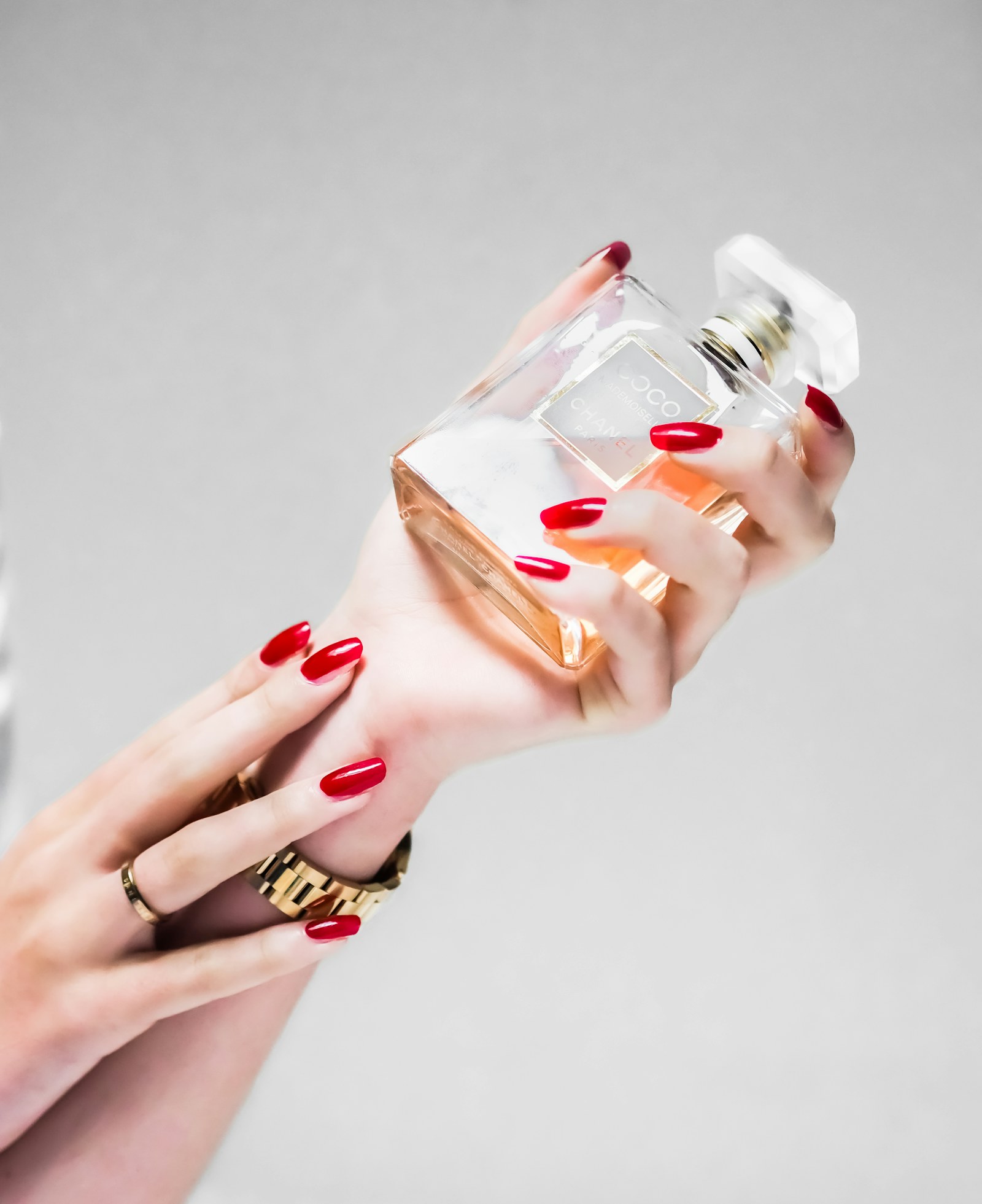
My bathroom cabinet used to look like a duty-free shop. Seven open bottles, three atomizers I had stolen from hotel rooms, two sampler sets I had bought from a department store in 2019 and never finished, and a tiny plastic vial of something called "Oud Satin Mood" that I had won in a beauty giveaway I did not remember entering. Every morning I would stand in front of this mess, sniff my wrist from the previous day to check whether yesterday's choice was still acceptable, and pick something different. Not because I wanted something different. Because I had been taught, gently and constantly, that variety was the point.
That is the weird thing about fragrance as a category in 2026. Nobody tells you to own eleven black t-shirts. Nobody tells you to rotate your morning coffee beans daily. But perfume — perfume is sold as a wardrobe, as a mood ring, as a small theatrical performance you put on every morning to broadcast who you are that day. The industry calls it "scent rotation." I called it a problem.
In November 2025, on what was apparently an ordinary Wednesday, I made a decision that I now describe, slightly jokingly, as the most boring choice of my adult life. I decided that for the next twelve months, I would buy the same bottle of perfume every month. The same one. No samples. No discovery sets. No "let me just sniff this at the airport." Just one bottle, on auto-buy, arriving in the post until November 2026.
This is a story about what happened.
The scent I picked
The bottle I landed on is a €95 eau de parfum from a small French house that does almost no advertising. I am not going to name it, for reasons I will explain later, but I can describe it: warm amber base, a soft iris at the heart, a top note that smells, annoyingly, like a clean cotton shirt that has been sitting on a radiator. It is the smell of someone's bedroom at 4 p.m. on a Sunday in October. It is not a "wow" scent. It is a "wait, where is that coming from" scent. I bought my first bottle on a friend's recommendation in March 2023 and wore it maybe twice, then forgot about it.
When I started this experiment, I pulled it out from the back of a drawer, sprayed it on the inside of my wrist, and waited an hour. The thing about perfume, which I had conveniently forgotten during my years of sampling, is that the first ten minutes are mostly the top notes — the bright, volatile, marketing-grade stuff — and the actual scent, the part that other people smell and form opinions about, takes twenty minutes to settle. The first ten minutes of this one smelled like fancy soap. An hour in, it smelled like a person. I went outside, walked past a bakery, and came back smelling like that bakery had been gently folded into the iris. It was, and I want to be honest about this, a deeply unremarkable experience. It was also, and I want to be even more honest, exactly what I had wanted from fragrance for years without being able to articulate it.
The first three months
I will not pretend the beginning was painless. The first month I wore it every day, I caught myself, repeatedly, reaching for other bottles out of pure muscle memory. There is a part of the brain that interprets "no choice" as "emergency," and the first three weeks of November were basically a low-grade emergency. I sprayed the new scent on Monday morning, felt vaguely bored by lunchtime, and quietly sprayed something else on top at 4 p.m. on Wednesday. I will confess: I cheated.
Then, somewhere around week four, something shifted. I stopped registering whether I had applied it in the morning. It became less a choice and more an atmosphere. I got out of the shower, I dried off, I sprayed, and I moved on with my day. There is a certain peace that arrives when one decision is permanently removed from your morning.
By month three, my husband could identify the perfume from across the room. So could my mother. So could the woman who cuts my hair, who told me on a Saturday in January that I had "stopped smelling like a department store." I did not take this as a compliment, exactly. But I took it as a sign that I was wearing something that was, slowly, becoming an attribute rather than an accessory.
The middle: months four through eight
This is the boring part of the experiment, which is also the part I want to defend the most.
For five months, from February to June 2026, I bought and wore the same scent, and almost nothing of interest happened. This is what people who love fragrance will tell you is the entire point, by the way: that a great perfume does not announce itself, it just lives with you. I believed this intellectually when I started. I believed it from the inside by April. By May I had stopped thinking about perfume at all on most days, which was, looking back, the goal.
That is not nothing. That is, in fact, the thing.
I should say what I did not lose during this time. I did not lose the pleasure of nice smells. I did not lose the habit of walking past a beauty counter. I did not lose the small indulgence of spraying something in a department store when nobody was watching, which I have done at least three times during the year and which I am not going to apologize for. What I lost was the background anxiety of which one today, the creeping suspicion that I was wearing the wrong thing for the wrong occasion, the sense that every public appearance required a small olfactory performance.
I have come around to thinking that anxiety was put there on purpose.
The cost
People always ask how much this cost. The bottle is €95. Over twelve months, that is €1,140. Less than €100 a month. Less than a streaming bundle. Less than I spent on samples, discovery sets, and "just one more" impulse buys over the previous five years, by a comfortable margin.
The financial argument for sampling is that you avoid settling on something you will get bored of. The empirical argument against sampling, in my case, was that I had spent roughly €2,300 over the previous decade and arrived at exactly the same place as €1,140 and twelve months of sameness: wearing a scent I liked, and being unsure if I still liked it, and spraying it anyway.
What surprised me
Three things surprised me, none of which I expected when I started.
People started recognizing me by my scent. I had been told this was a "perfume influencer" thing, and therefore I assumed it was fake. It is not. By month six, at least four people had mentioned, unprompted, that I "always smell the same." None of them found this strange or dull. None of them suggested I might be missing out. The most common reaction was mild relief, as though they had been waiting for someone they knew to stop switching.
My skin reacted differently in different seasons. The same perfume, applied to the same wrist, smells slightly different in February than in August. Warmer weather pulls more of the iris and the amber. Cold weather pulls more of the cotton-radiator top note. I had always assumed perfume smelled the same all year and I just got used to it. It does not, and I did not. I was sampling, in effect, four or five different scents every month and never realizing it.
I started resisting new products in every other category. Once the perfume experiment worked, I pulled the same trick on lipstick, then on face cream, then on shampoo. I have not bought a beauty "discovery set" since February. The cumulative effect on my wallet is not life-changing. The cumulative effect on my brain is.
Why I am not naming the brand
I have left the brand anonymous for one reason: I do not want this article to read like an advertisement. The actual bottle does not matter. What matters is the structural point, which is that almost any reasonably well-made, mid-priced, soft-leaning scent will do the same job. I have read the fragrance forums. People who do this with €40 bottles say the same things I have just said. People who do it with €400 bottles say the same things. The category is not where the magic is. The repetition is.
If you are determined to know, I will tell you privately. But the experiment is not about chasing a specific scent. It is about noticing how much of your beauty routine is being run, in the background, by a recommendation algorithm.
The honest summary
In November 2026, when this experiment ends, I will let myself buy something new. I am already curious. I want to know if twelve months of sameness will make me love sampling again, or if it will make me unable to tolerate it. My bet is on the second.
Twelve months of one scent did not make me less of a person. It made me easier to be around, by my own report and by external report. It saved me roughly €1,200 over what I had been spending. It removed a decision from a part of my day that did not need another decision. It did not make me smell boring. It made me smell present.
If you are a sampler, a rotator, a person who owns more bottles than they can finish — try it. Pick one. Buy it on subscription if your retailer allows it. Wear it for a month before you judge it. Then wear it for another month. Then another. By month four, you will either be cured, as I was, or you will have learned something truer about what you actually want from fragrance than any discovery set ever taught you.
I have twelve bottles of the same perfume on a shelf in my bedroom. They look ridiculous and they look like the most useful purchase I have made in a decade. The industry would prefer I keep trying new things. I now understand why.