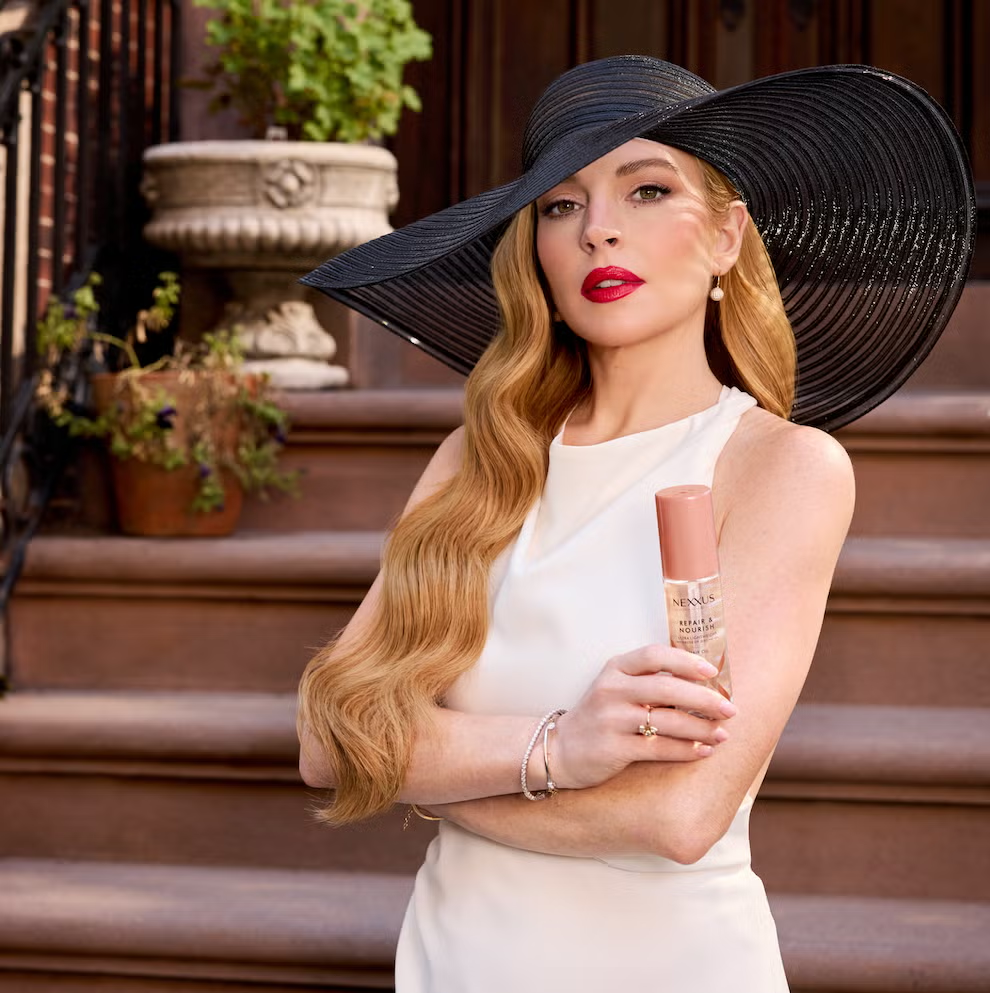
Lindsay Lohan is starring in a new Nexxus campaign titled "Style Swap", where she plays on nostalgia for her famous role in the 1998 film "The Parent Trap". In this campaign, she embodies iconic looks while using a British accent, reminiscent of her legendary character. The campaign focuses on hair care, an area where Lindsay has experimented a lot over the years. In an interview ahead of the campaign launch, she shared her tips for keeping hair healthy, despite the various hair transformations she has undergone throughout her career.
Lindsay confides that she uses Nexxus hair oil to nourish her hair and avoids washing it daily to prevent it from drying out. She also mentioned her admiration for redheaded actresses like Julia Roberts and Julianne Moore, who have inspired her in her beauty journey. As for her own style, she admits she still loves wearing hair accessories, especially headbands, a trend that reminds her of the 90s.
Continuing with her iconic roles, Lindsay also mentioned her return in the sequel to "Freaky Friday", titled "Freakier Friday", noting that fashion and hair styles will play a central role in it. Finally, motherhood has transformed her beauty routine: she now favours more natural products and a minimalist approach to skincare, focusing on wellness moments for herself.
Overall, this campaign for Nexxus celebrates both nostalgia and Lindsay Lohan's personal evolution, while highlighting the importance of hair care and empowerment in pursuing beauty trends.
The genius of the Style Swap concept
The Style Swap campaign is a clever piece of brand marketing that works on multiple levels. On one level, it's a nostalgia play: 1998's The Parent Trap remains one of the most beloved family films of its era, and Lindsay Lohan's dual performance as twin sisters Hallie and Annie is etched in the memory of an entire generation. Bringing the character back — and having Lohan play both roles with a British accent, as she did in the original — is a direct appeal to that millennial memory.
On another level, the campaign is a genuine tribute to Lohan's own hair journey. Throughout her career, Lohan has been photographed with virtually every hairstyle imaginable: red curls, blonde highlights, beach waves, pixie cuts, bobs, and extensions. The Style Swap framing allows Nexxus to position each of these looks as a deliberate choice rather than a celebrity style mishap, which is the more common framing in tabloid coverage.
For Lohan herself, the campaign represents something of a reclamation. After a decade of tabloid scrutiny over her appearance, the chance to revisit her iconic looks on her own terms — as a confident adult choosing to honour her past — reads as a more graceful narrative than the one usually written about her.
The hair lessons Lohan's career has taught
Lohan's hair journey is a masterclass in what not to do with extensions. In her twenties, she was frequently photographed with extensions that looked too long, too thick, or too obviously added — the kind of damage that even professional stylists struggle to disguise. By her thirties, her hair showed the wear of a decade of bleaching, heat styling, and extensions. The brittleness, the thinning, the breakage were visible in every red carpet photo.
The current Nexxus campaign is, in this sense, almost a public service announcement. Lohan explicitly credits hair oil and reduced washing as the changes that brought her hair back. These are not glamorous tips, but they're effective. Oil treatments rebuild the lipid layer of the hair shaft, reducing moisture loss and protecting against further damage. Less frequent washing preserves the natural oils that condition the hair.
Her mention of Julia Roberts and Julianne Moore is also telling. Both women have worn their natural red hair colour throughout their careers, at a time when Hollywood often pressures redheads to dye their hair blonde or brunette. Their consistency and confidence in their natural colour likely influenced Lohan's own eventual return to her natural auburn shade.
The 90s hair accessory revival
Lohan's mention of headbands is a reference to a trend that has been quietly building for several seasons and is now firmly established. The 90s hair accessory revival — headbands, claw clips, silk scarves, butterfly clips — has been one of the most wearable trends to come out of the broader Y2K fashion wave.
The headband in particular has seen significant evolution. Where 90s versions were often thin and plasticky, today's iterations include padded velvet styles, pearl-embellished slides, and architectural versions that pull the hair back completely. Brands from Slip to Lelet NY have made the headband a high-fashion accessory, worn at the most elevated red carpet events.
The claw clip is another 90s revival that has stuck around. Once dismissed as a casual, at-home hair tool, the claw clip has been elevated into a high-fashion accessory by brands like Kitsch and Claw Clip Co. Celebrities from Kim Kardashian to Bella Hadid have worn them on red carpets, often with couture gowns.
The Freakier Friday effect
The mention of the upcoming Freakier Friday sequel is significant. The original Freaky Friday (2003) was a defining film for millennial women, and the sequel has been heavily anticipated. For Lohan's fan base — women now in their thirties and early forties, many of them mothers themselves — the sequel promises both nostalgia and a chance to see their childhood star in a new context.
The note that "fashion and hair styles will play a central role" in the sequel is an interesting one. The original film used body-swapping comedy to explore generational differences in style: the mother's tailored blouses and pearl earrings against the daughter's band tees and chunky highlights. The sequel is likely to update these contrasts for a new generation, with TikTok-era aesthetics standing in for the early-2000s looks.
Motherhood as a beauty reset
Lohan's reference to motherhood changing her beauty routine is one that resonates with many women. After having her first child in 2022, she has spoken in several interviews about simplifying her routine — fewer products, more focus on wellness, less interest in the kind of elaborate looks that defined her younger years.
This is a common shift among new mothers, who often find themselves with less time for multi-step routines. But it's also a deeper change: many women report a kind of liberation in stepping back from the relentless optimisation of their appearance. The priorities shift from "looking good" to "feeling well," and a beauty routine that supports the latter often looks quite different from one focused on the former.
For Lohan specifically, this shift has coincided with a kind of public rehabilitation. After years of tabloid coverage focused on her appearance and her personal struggles, the recent narrative around her has been one of stability, motherhood, and creative reinvention. The Style Swap campaign fits neatly into this narrative — a woman in her late thirties looking back on her youth with affection rather than regret.
The deeper appeal of nostalgia in beauty marketing
The Nexxus Style Swap campaign is part of a broader trend in beauty marketing toward nostalgia. Recent years have seen a flood of campaigns, product launches, and brand revivals that lean into nostalgia for the late 1990s and early 2000s.
This works for several reasons. For millennials — now the largest demographic with significant spending power — these references tap into a formative period of their lives. For brands, nostalgia marketing tends to perform strongly on social media, where users happily share and tag friends in nostalgic content. For the celebrities involved, it offers a way to engage with their past work in a context that feels celebratory rather than exploitative.
Lohan is, in many ways, the perfect nostalgia ambassador. Her career arc — child star, teen icon, tabloid fixture, mother and entrepreneur — mirrors the millennial experience of growing up under constant public scrutiny. Her willingness to revisit her most iconic roles with warmth and self-awareness is exactly the tone that nostalgia marketing requires.
What this campaign means for Nexxus
For Nexxus, the Style Swap campaign is a high-profile piece of brand-building. The hair care category is dominated by a few major players (L'Oréal, Pantene, Garnier, Dove), and standing out requires either a strong product story or a memorable campaign. By aligning with Lohan and the cultural weight of The Parent Trap, Nexxus gets both.
The brand's product positioning — affordable, salon-quality hair care — fits the campaign's emphasis on accessible beauty. Lohan is a celebrity whose look has evolved over the years, but the products she's endorsing are within reach of the average consumer. This is a different model from the high-end celebrity fragrance deals of the 2000s; it speaks to the current era's interest in authentic, attainable beauty.
How to recreate Lohan's hair transformations
For those inspired by Lohan's many hair moments, several styles are achievable at home with the right products.
The red colour, her natural shade, can be maintained with colour-depositing conditioners and regular gloss treatments. The beach waves that defined her Mean Girls era can be achieved with a curling wand and a salt spray. The headbands she's referenced are widely available, from high-street versions to more elevated options.
The most important lesson from Lohan's own hair journey, though, is the one she explicitly shares: oil treatments and less frequent washing. These two changes have rebuilt the health of her hair after years of damage. They're the kind of changes that work for everyone, regardless of style preference.