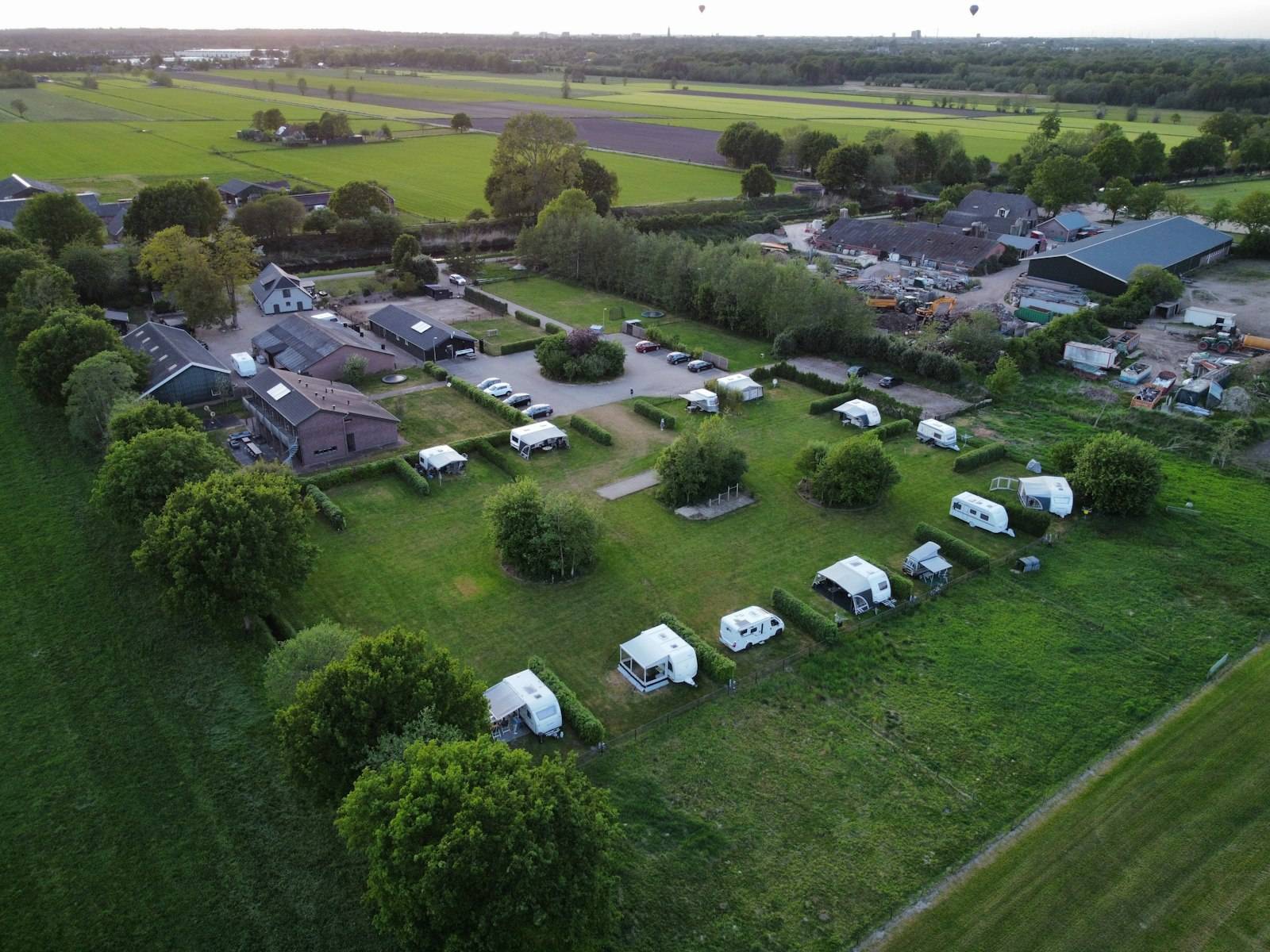
Every summer the same conversation happens in my group chat. Someone suggests a house upstate, someone suggests Portugal, and nobody suggests a campsite. In France, that last option would probably be the first one proposed.
Camping in France is not the tent-and-cold-shower experience a lot of Americans picture. It is a parallel holiday industry: mobile homes with proper kitchens, aquatic parks with slides, kids' clubs, a bakery on site, and a weekly price that can undercut a middling hotel by half. The market has consolidated around a handful of big players, and outdoor accommodation is a far bigger share of the French holiday calendar than most visitors assume.
One of them sits at the centre of that market more than most English-speaking travellers realise. maeva — the booking site at maeva.com — started in 2014 as an online travel agency inside the Pierre & Vacances–Center Parcs group. Twelve years later it lists thousands of campsites, holiday residences, chalets and hotels across France and Europe, franchises around 150 campsites under three separate brands, and has just rebranded its parent company to maeva&co to reflect how far the business has spread.
Here is what maeva actually is, how the different parts fit together, and where the model is worth your attention — and where it is not.
What maeva Actually Is
The company launched in July 2014 as an online travel agency within the Pierre & Vacances–Center Parcs group. The original brief was narrow: sell French seaside and mountain holidays online, in a market where most bookings still went through agencies or the phone. Pierre & Vacances already owned the apartment-residence and Center Parcs brands; maeva was the group's attempt to build a digital distribution arm that could sell other people's inventory as well as its own.
That distinction matters more than it sounds. maeva is not, for the most part, a hotel chain. It is a marketplace with a chain attached. The campsites, residences and chalets you see on the site are mostly owned and run by independent operators; maeva brings the demand, the booking engine and, increasingly, the brand standards.
The growth came in stages, and each stage added a different kind of inventory:
2015 — maeva Home. The company created a professional private-rental concept, with around 20 local agencies managing roughly 3,500 seasonal rental owners. This is the part of the business that handles houses, villas and apartments owned by individuals, with a local agency handling keys, cleaning and guest support.
2016 — the merger with La France du Nord au Sud. maeva's teams merged with the French-holiday specialist, taking the combined catalogue to nearly 50,000 holiday rental addresses. That is the moment the site stopped being a seaside-and-ski operation and became a national one.
2018 — the campsite network. maeva launched an affiliated campsite chain with 56 establishments, split into three ranges: maeva Club, maeva Escapades and maeva Respire. This is the piece most travellers interact with without knowing it, and the ranges are genuinely different products rather than marketing labels.
2023 — Vacansoleil. The group acquired the Dutch camping distribution leader, giving it a European booking platform and a much larger campsite footprint outside France.
2024 — Boost Your Immo. maeva Home acquired the rental agency network, adding six agencies and around 450 owners.
April 2026 — maeva&co. The parent company rebranded, organising itself around four divisions: distribution (maeva.com, Vacansoleil, lafrancedunordausud.fr and mistercamp.com), holiday real estate (more than 40 own agencies), outdoor hospitality franchising (Camping Paradis, maeva and Ushuaïa Villages, around 150 franchised campsites), and agritourism through Parcel Tiny House, acquired in September 2025. In January 2026 it also took over the Camping Paradis and Ushuaïa Villages franchises, which is what made it the largest outdoor-hospitality franchisor in France.
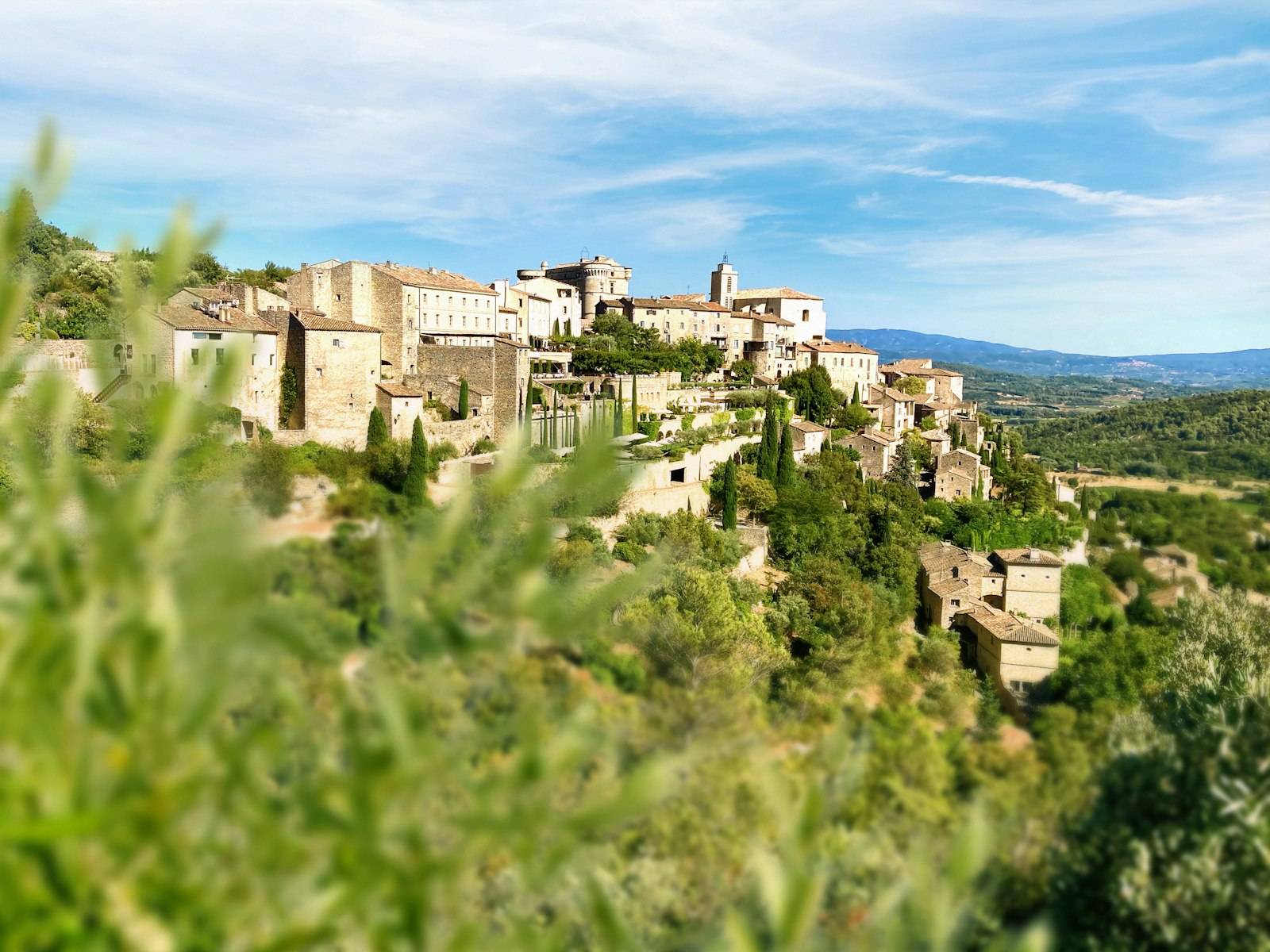
So when you book through maeva, you are not booking one company's hotels. You are booking into a distribution machine that sits on top of several thousand independent properties, a franchise network, and a real-estate management business. That is the single most important thing to understand before you use it.
What You Can Actually Book
The site is broader than the camping association suggests. The main categories are campsites, tourist residences, private rentals, holiday villages, prestige residences, houses and villas, chalets, and hotels.
In practice, that breaks down into four useful buckets:
Campsites. Around 150 affiliated campsites, from small rural sites to large holiday parks with aquatic areas and entertainment. The site also lists partner campsites outside the maeva network, including Center Parcs, Pierre & Vacances, Belambra, Odalys, Lagrange and MMV. You are not limited to maeva-branded properties.
maeva Home rentals. Private houses, villas and apartments managed through local agencies, mostly in France. This is the option if you want a kitchen, separate bedrooms and a base rather than a resort. The agency model means there is a real person nearby if something goes wrong, which is not always true of pure peer-to-peer rentals.
Residences and villages. Apartment-style holiday residences, often with a pool, close to ski lifts or the coast. These sit between a hotel and a rental: more services than an apartment, less formality than a hotel.
Hotels and chalets. A smaller but growing part of the catalogue, including ski chalets in the Alps and hotels in city and coastal locations.
Geographically, the core is France: Provence-Alpes-Côte d'Azur, Auvergne-Rhône-Alpes, Occitanie, Nouvelle-Aquitaine, Brittany, Corsica and more. The ski list covers Avoriaz, Arc 1800, Alpe d'Huez, Méribel, Val Thorens, Les Ménuires, La Plagne and Valmorel. Beyond France, the site covers Italy, Austria, Switzerland, Spain, Croatia, Portugal, Belgium, Germany and the Netherlands, plus Guadeloupe and Martinique in the Caribbean.
The Three Campsite Ranges, and Why They Matter
This is the most practically useful thing to understand about maeva, and most English-language coverage skips it.
maeva Club is the holiday-park end of the range: large sites with aquatic parks, slides, kids' clubs, evening entertainment and a full programme. If you are travelling with children who need something to do every hour, this is the range to look at. It is also the noisiest and the most expensive.
maeva Escapades is the middle: mid-sized campsites with a pool and basic services, but without the full animation programme. Most of the network sits here. It suits families with older children, couples, and anyone who wants a pool but not a disco.
maeva Respire is the eco-committed, quieter end: smaller sites, more nature, fewer facilities, a stronger emphasis on local produce and low-impact operation. A Respire site can be lovely, but if you book it expecting a water park you will be disappointed.
The ranges are not a quality ranking. They are a description of what kind of holiday you are buying. Booking the wrong one is the most common way to have a bad week at a French campsite — and it is entirely avoidable if you read the property description rather than the brand name.
The Booking Promises, Decoded
maeva's site makes a set of promises that are worth reading carefully, because some are stronger than they first appear and some are narrower.
Flexible cancellation up to the day before. This is a genuine differentiator in a market where many campsites still ask for a deposit months in advance. But it applies to specific rate plans rather than every booking, and the cheapest non-refundable rates are usually excluded. Check the cancellation table on the specific property before you pay.
Best-price guarantee. If you find the same stay cheaper elsewhere, maeva says it will match or beat it. In practice these guarantees come with conditions — same dates, same accommodation type, same occupancy, proof required — and they are designed to be used occasionally rather than routinely.
Payment in instalments. Useful for a family holiday booked months ahead. The schedule depends on how far in advance you book and the total amount.
10 per cent back into your cagnotte. This is credit for a future booking, not cash. It is a loyalty mechanism, and it only makes sense if you expect to book again.
More than 200,000 reviews. The site claims over 200,000 authentic guest reviews. That is a meaningful sample, but it is aggregated across a very large and uneven catalogue, so the score for an individual property matters more than the site-wide number.
Eco labels. Some properties carry Clef Verte or European Ecolabel certification. These are real, audited labels rather than self-declared green marketing, but they cover the property's environmental management, not necessarily the carbon cost of getting there.
Départ 18:25. A French scheme that gives 18-to-25-year-olds subsidised travel, including through partner booking platforms. It is not available to everyone, and it is not the same as a discount on the accommodation itself.
One thing the headline price does not always include: booking fees and local tourist taxes, which are often calculated per person per night and paid on arrival. On a family of four for a fortnight, that can add a meaningful amount to the final bill.
Who It Is For — and Who It Is Not
It is for families who want space and a kitchen. A mobile home or an apartment with three bedrooms, a fridge and a washing machine is a fundamentally different proposition from two hotel rooms, especially for a week or more.
It is for people who want a French holiday rather than a resort bubble. The catalogue is heavily French, and the best properties are often in regions rather than on branded resorts: the Atlantic coast, the Luberon, the Alps in summer.
It is for groups. Campsites and residences handle groups better than hotels do, and the per-person price falls sharply as occupancy rises.
It is for skiers who want self-catering. The Alpine residences and chalets are a real alternative to a ski hotel, particularly for a group that wants to eat in.
It is not for people who want hotel service. There is no concierge, no daily housekeeping in most rentals, and no-one bringing you a coffee by the pool unless you paid for the campsite bar.
It is not for non-French speakers who want a fully English experience. maeva does run an English-language version of the site, and the booking flow works, but the product — the campsite, the local agency, the customer service — is fundamentally French. That is part of the appeal for some people and a genuine friction point for others.
It is not for a two-night city break. The model is built around week-long stays, Saturday-to-Saturday rhythms and self-catering. If you want a hotel in the middle of Lyon for two nights, book a hotel.
What Could Be Better
A recommendation is only useful if it is honest, so here are the real limitations.
The brand is on the booking, but the property is someone else's. maeva is a distributor and a franchisor, not the operator of most of what it sells. Quality control is stronger inside the maeva campsite network than across the whole catalogue, and the variance between a great independent campsite and a tired one can be wide. The reviews and the range labels are your best filters.
The site is French-first. The English version exists, but it is thinner: fewer editorial pages, occasional translation gaps, and a customer-service operation that is geared around French opening hours. If you do not read French, budget extra time for the terms and conditions.
Peak summer is expensive and sells out early. The headline discounts on the homepage are real, but they cluster in shoulder seasons and specific weeks. A family week in the south of France in August is not a bargain, and the best properties go first.
The extras add up. Tourist tax, booking fees, cleaning fees on some rentals, and optional extras such as linens or a baby kit can move the final price well above the number you first saw. Read the breakdown before you compare it with a hotel.
The "up to" discounts are marketing. "Up to 38 per cent off" means some properties, some dates. The discount on the week you actually want may be smaller — or nonexistent.
Conclusion
maeva is the least glamorous company in this series and possibly the most useful. It does not sell a dream of barefoot luxury or a private members' club. It sells the ordinary French holiday — a mobile home under pine trees, a pool, a bakery, a bike ride to the beach — and it has built a genuinely large machine for doing so: thousands of partner properties, 40-plus local rental agencies, 150 franchised campsites, and a booking platform that now reaches well beyond France.
The rebrand to maeva&co in April 2026 is a signal of where this is going: more franchising, more European inventory, more agritourism through Parcel Tiny House, and a bigger share of a market that English-speaking travellers still mostly ignore. Whether that scale improves the holiday or dilutes it is the open question. The range system — Club, Escapades, Respire — is the company's answer, and it is a better one than most booking sites offer.
If you are planning a French holiday and the hotel prices have made you reconsider, maeva's site is the place to see the current campsites, residences and offers. Start with the range that matches how you actually want to spend the week, read the cancellation table before you pay, and check whether your employer or your bank has a partner code — in France, it is the most underused discount in the whole system.