Every autumn the same three questions land in my inbox. Where should we go for the spring break? Is there anywhere in France that is not already fully booked? And can anybody find a hotel with a pool and half-board that is not a package holiday in disguise?
France is now the default answer for a lot of families who used to fly somewhere. The country has become easier to reach by train than most people realise, the summer is reliably warm along the Mediterranean, and the cost of a two-week break has not moved the way airfares have. The problem is that the classic French seaside resort has become a bit of a monoculture — a strip of buffets, a lido, and a kids' club that runs on a strict schedule.
One brand has spent more than half a century doing something subtly different. Vacances Bleues was founded in Marseille in 1971 by a non-profit association whose stated mission was to make holidays accessible to as many people as possible, and — this is the part that still surprises people — that association is still the group's sole shareholder today. No private investors, no quarterly pressure. The company operates roughly two dozen hotels, holiday clubs and residences across France, from the ski slopes of the Alps to the palm promenades of the Riviera and the granite coves of the Normandy coast. You can browse the current properties on the official Vacances Bleues site.
Here is what the model is, why it is genuinely different from a normal hotel group, and where it does not suit you.
What Vacances Bleues Actually Is
The legal entity is VACANCES BLEUES, S.A.S., registered in Marseille under number 421 866 344, with the registered office at 32 rue Edmond Rostand in the 6th arrondissement. It has a Paris office on rue Delambre and a reservations line open weekdays and Saturdays. The company describes itself with a phrase that sounds corporate but is not: it is part of the French économie sociale et solidaire, the social and solidarity economy — a category of business where the shareholder is typically an association rather than a fund.
That detail is not decoration. It is the reason the company can run a policy no shareholder-owned group would tolerate: restaurants that buy from producers within a 150-kilometre radius of each property, holiday villages designed to be walked rather than driven, shuttle buses to ski slopes instead of car parks full of idling vehicles, and an explicit ambition, stated publicly, to become a benchmark operator for responsible tourism in France by 2030. The group frames its purpose around three ideas it calls vivre local, vivre bien and vivre ensemble — living locally, living well, living together.
It also traces its origins to an early holiday village near Lac de Serre-Ponçon, which grew into hotels, then into clubs, then into residences. It has been voted France's favourite holiday brand in Capital's annual survey, and in 2024 the hosting arm of the group reported turnover of around €80 million, with roughly 830 staff serving close to 190,000 guests.
Three Formats, Not One
The single most useful thing to understand about the portfolio is that "Vacances Bleues" covers three genuinely different products, and picking the wrong one is the most common booking mistake I see people make.
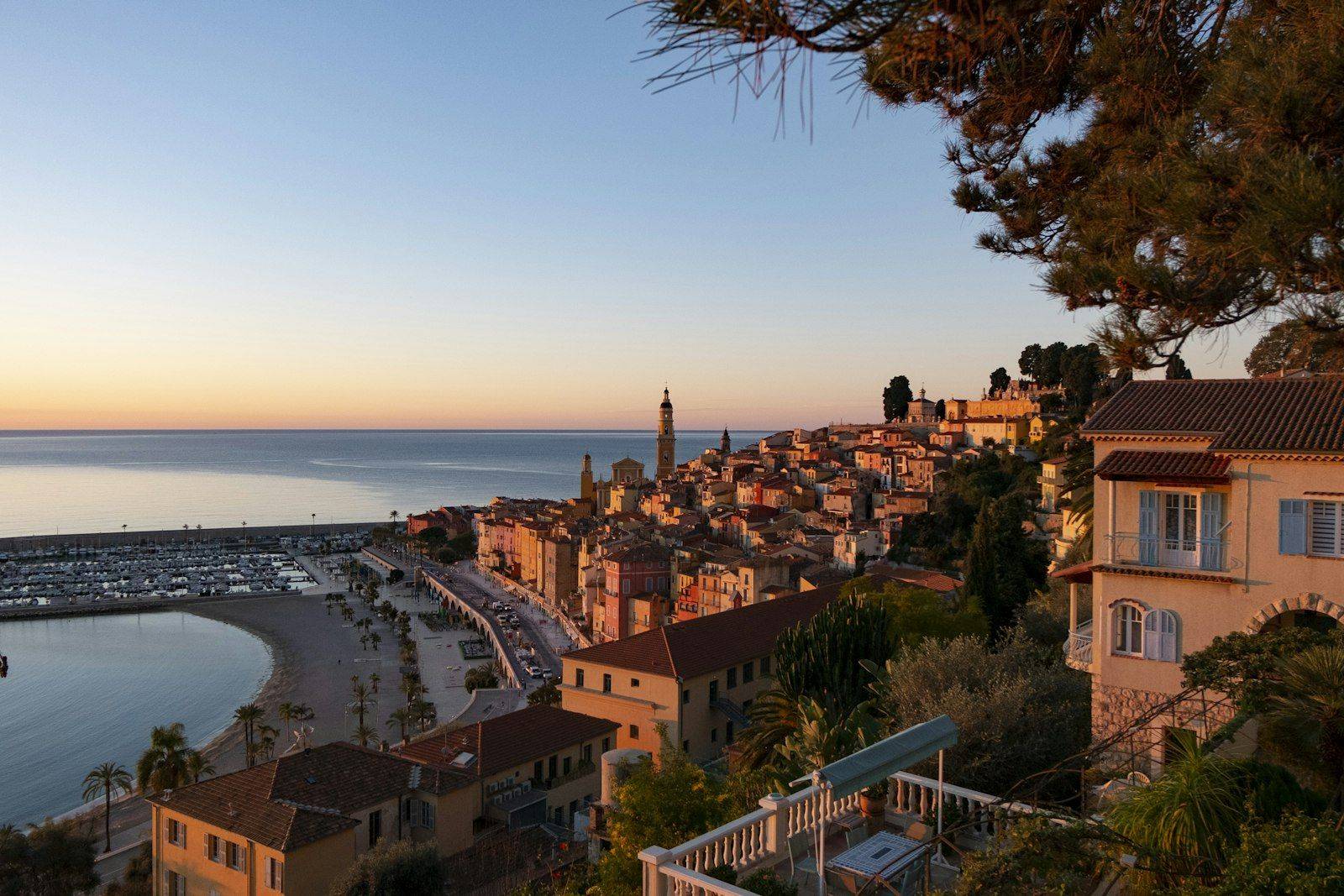
Hotels are the city and short-break option. Think Hôtel Le Royal on the Promenade des Anglais in Nice, the Royal Westminster in Menton, Villa Modigliani in Paris, Le Splendid in Dax, the Delcloy at Saint-Jean-Cap-Ferrat, or the Castel Luberon in Provence. These are three- and four-star properties with pools, spas and restaurants, but they are not clubs: there is no kids' club, no all-day organised programme, no group entertainment. If you want to walk to dinner, take a train to the next town and be left alone, this is the format you want.
Clubs are the heart of the brand, and they are closer to the classic French village de vacances than to anything American readers might picture. Club Plein Sud in Hyères with its private beach, Jardin de l'Atlantique near Les Sables-d'Olonne, the Arc-en-Ciel Les Kareellis in the Maurienne valley — these are self-contained holiday villages with meals included, a supervised kids' club, evening entertainment, multisport courts and staff on hand from breakfast to after-dinner. You pay more, but the day is planned for you.
Résidences are the flexible middle ground: apartments with kitchens and washing machines, in buildings the group also runs, where you can buy groceries and cook dinner yourself after a day at the beach. Résidence Le Grand Large in Biarritz and Les Provinces Opéra in Paris are good examples. Residences are the value option and the one most popular with families who want space without paying club prices.
Pick deliberately. A couple who wants a week on the Riviera with a book and a pool should book a hotel. A family with two children under ten who wants everyone to have a good time should book a club. A family who wants a kitchen and a washing machine should book a residence.
The Mountains Are Where the Growth Is
The Alps have become the strategic centre of the portfolio, and the reasons are practical. French ski resorts price on scarcity — a Christmas-week bed in a chalet village is not a commodity — and a group that owns or operates the resort's hotels can compete on packages in a way an independent hotel cannot.
The most recent move reinforces the trend: Vacances Bleues acquired Club Arc-en-Ciel Les Karellis, its first move into the Maurienne valley, following what the group called three years of success in snow destinations. Jérôme Vayr, Chairman of the Board of Vacances Bleues France, framed the acquisition as a step towards making the brand a reference for family ski holidays across the French Alps. Alongside Les Karellis, the portfolio includes Club Les Alpes d'Azur at La Salle-les-Alpes, Belle Plagne, Serre Chevalier and the Serre-Ponçon area, where the whole group began.
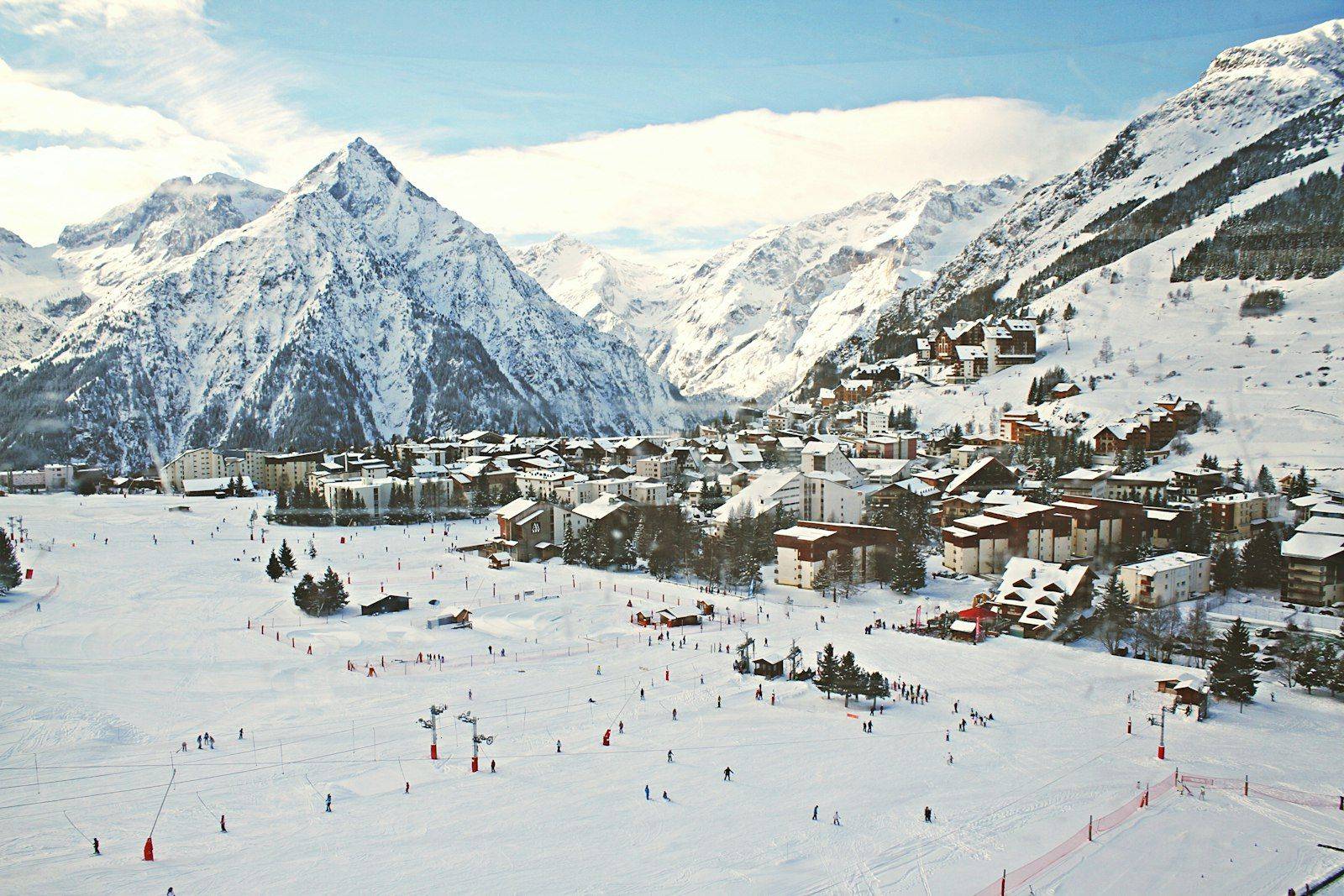
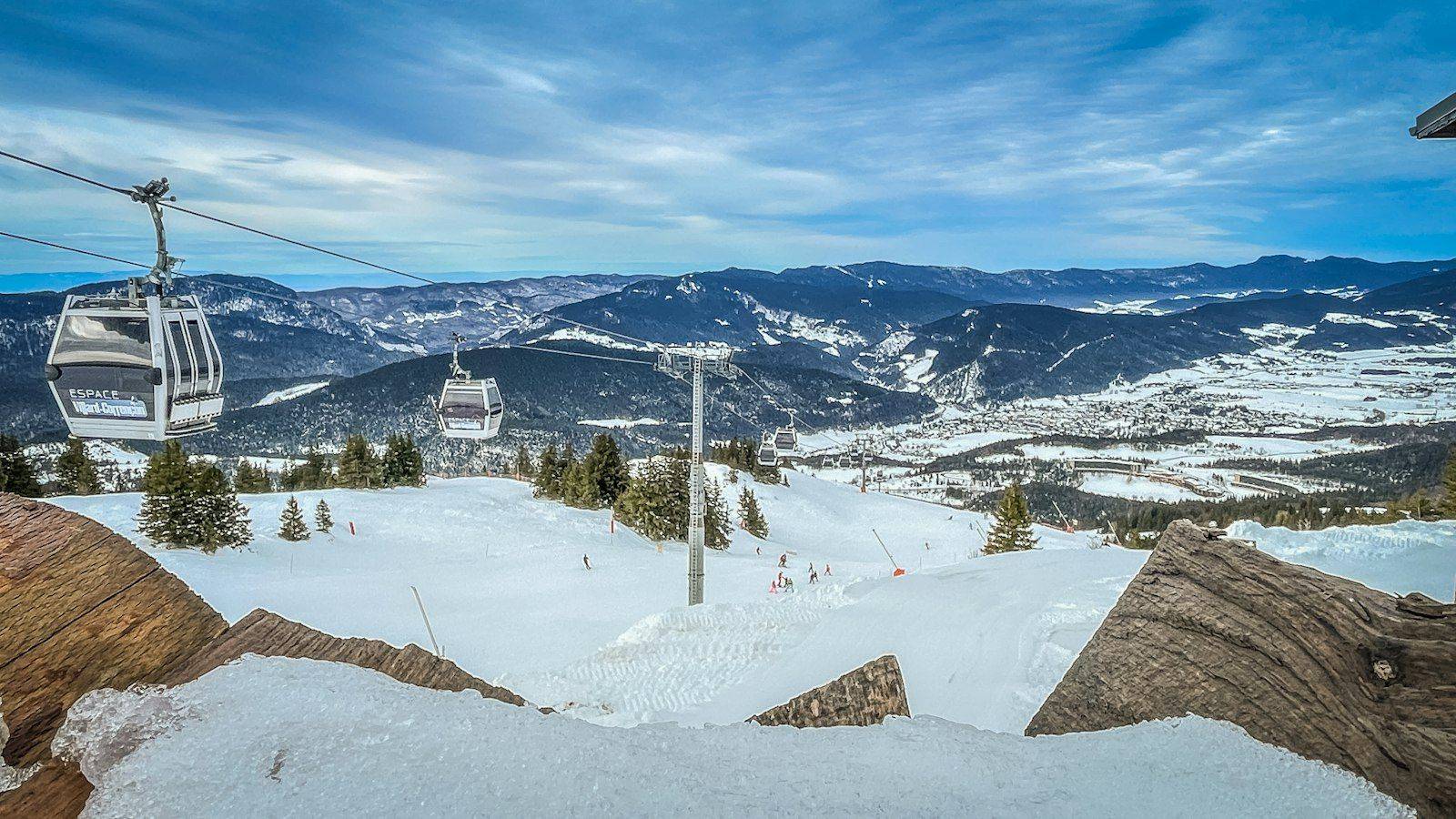
For a winter trip the practical question is always whether the property is au pied des pistes — at the bottom of the slopes, walkable — or a shuttle away. The group has been deliberately expanding the walkable end of its portfolio and running shuttle buses to the rest, which is a small thing that makes a large difference when you are carrying a six-year-old's skis at the end of a long day.
The Coast, and the Cities
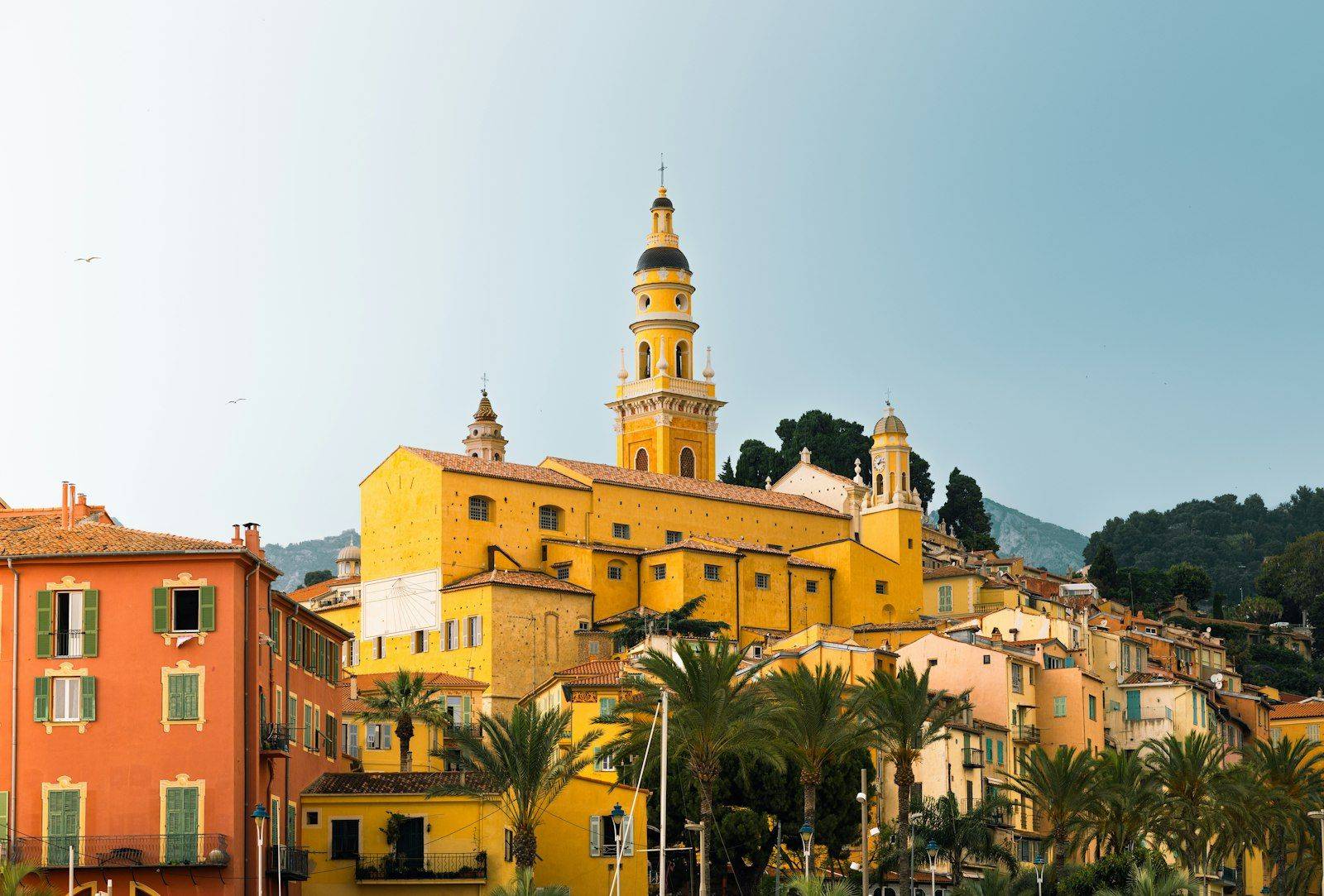
The Mediterranean properties are the ones the brand is best known for outside France, and they are concentrated around the Riviera: Nice, Menton, Hyères and Saint-Jean-Cap-Ferrat, plus clubs and residences further west along the coast. Menton is the textbook example of why the French Riviera is worth the trip — it is warm in February, it has a genuine old town rather than a purpose-built resort strip, and the group has a hotel there.
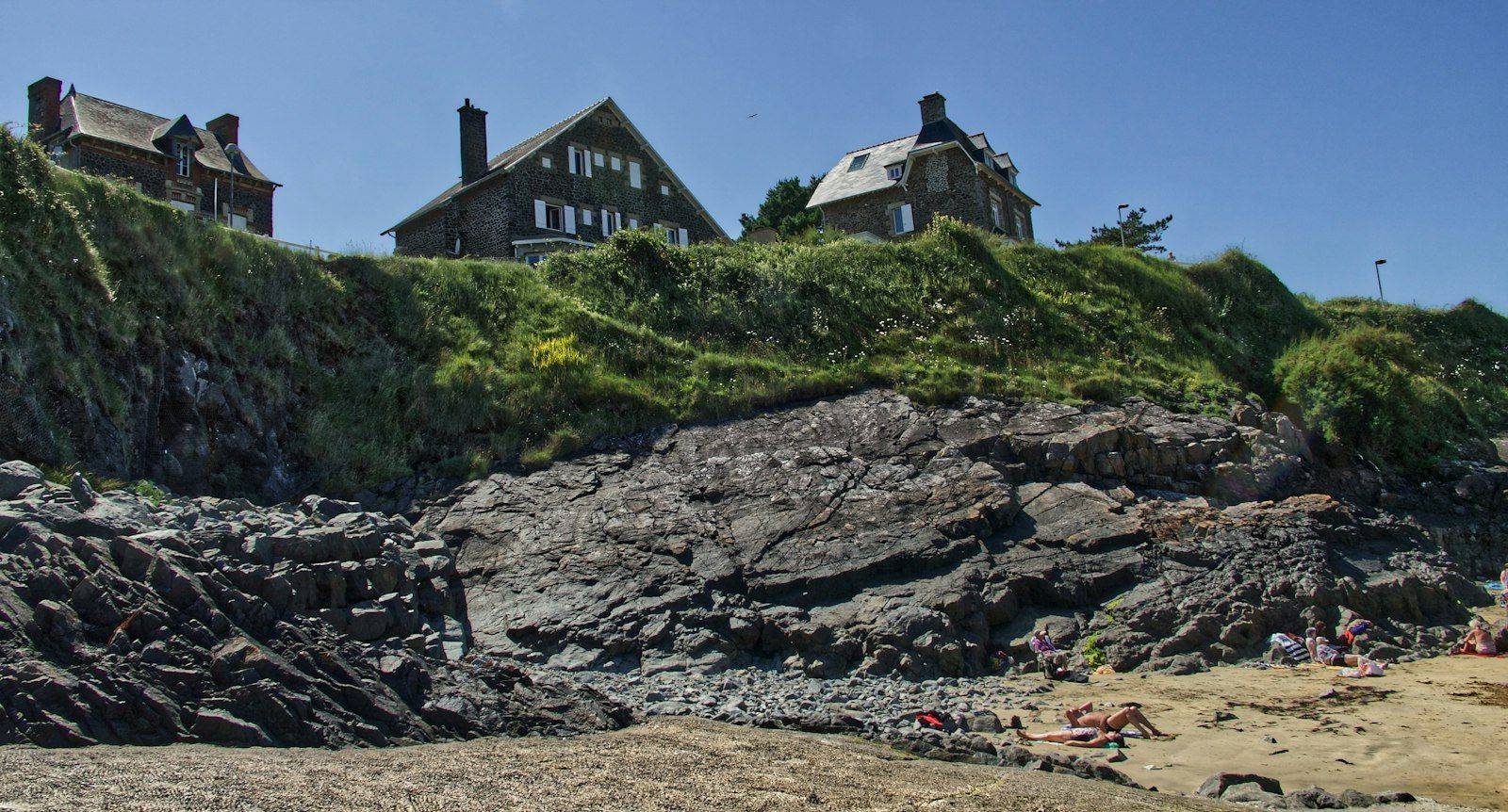
The Atlantic side is a different mood entirely. Biarritz, Les Sables-d'Olonne, the Breton and Norman coast: cooler water, dramatic granite and schist coastline, and holiday villages built into the landscape rather than on top of it. If the Riviera is about the terrace and the pool, this is about the walk to the cove.
Then there are the cities. Villa Modigliani in Paris and Les Provinces Opéra sit in the capital, and the group runs a substantial business-events arm through vacancesbleues-business.fr, which reported €11.5 million in 2024 — up 22% on 2023, and now between 20 and 30 per cent of turnover at several of its three- and four-star sites. If you are booking a residential seminar or a company retreat in France, that is a serious operation, not a sideline.
Who It Is For — and Who It Is Not
It suits you if you want France without the flight, if you are travelling with children and want the day structured for you, if you are going with a large group, or if your employer or pension fund has a partner agreement with the group. The works council channel is the one most people outside France have never heard of: a comité d'entreprise — the French equivalent of a company works council — negotiates preferential rates for its members, and the booking engine has a dedicated partner-code field for it. The same applies to some pension funds and mutual insurers.
It suits you less if you want a boutique or design-led small hotel, if you are travelling alone and value anonymity over programming, or if your dates are fixed in peak season. Peak French weeks — the August fortnight, the Christmas school holidays — are tight regardless of who owns the hotel.
And it is not for everyone on price. This is a mid-market, three- and four-star operation, not a luxury brand, and there is no version of it that is cheaper than the equivalent independents in France. The value is in the package, the programming and the structure, not in the nightly rate.
Price, Perks and the Fine Print
The booking mechanics are unusually rich for a group of this size, and if you are ordering in France rather than for France, they are worth understanding before you click through.
Early-bird discounts are real. At the time of writing the site is advertising up to 30 per cent off for early booking with a deadline of 26 October, separate offers of up to 50 per cent off for children with the first child free at selected properties, and up to 15 per cent off stays of two weeks or more. These are applied at property level, so the actual value depends entirely on where and when you are going.
Le Cercle Bleu is the loyalty programme, and the booking flow has a dedicated promo-code field for it.
Cancellation terms are on the strict French scale, and they are worth reading before you commit: €30 to cancel more than 46 days out; 10 per cent between 45 and 31 days; 30 per cent between 30 and 21 days; 50 per cent between 20 and 8 days; and 100 per cent inside the final week or in the event of a no-show. That last step is the one that catches people out.
Prices exclude booking fees and local tourist taxes, which are calculated per person per night and paid on arrival. It is a small thing that adds up over a family of four for a fortnight.
Your money is protected. The group's financial guarantee is provided by UNAT, the French national federation of tourism associations, and it is registered as a tour operator with Atout France. The booking engine also runs an online pre-check-in for each reservation once you have an account.
If any of that sounds like the kind of holiday you are planning — French destination, family or group, some structure but not a rigid package — it is worth looking at the properties and current offers directly.
What Could Be Better
A soft recommendation is only useful if it is honest, so here are the real limitations.
The site is in French. The main booking site runs primarily in French, and while English-language information exists around the group, the booking flow, the terms and the customer service are French. For anyone who does not read French, that is a genuine friction point — though the reservations line does handle non-French enquiries.
The product is deliberately standardised. If you have spent your life booking small independent hotels and you are the sort of guest who notices when the breakfast is served from a machine, a club will frustrate you. The programming is the point, and it does not leave much room for individuality.
Club holidays are not cheap. You are paying for meals, the kids' club, the entertainment and the shuttle. If you are a family of two with a kitchen in a residence, you will do better and pay less. Choose the format that matches how you actually travel rather than the one that sounds most like a holiday.
Peak weeks sell out early, and the early-bird discount deadline is real rather than theoretical — miss it and the price of a family week in the Alps can move considerably.
Conclusion
Vacances Bleues is the most interesting French hotel brand that most non-French people have never heard of, and that is largely deliberate. It was built by an association with a social mission, it has stayed that way for fifty-five years, and it has consistently chosen to run a modest number of well-located properties with a strong point of view rather than chase scale.
The result is a brand that does the ordinary French holiday better than the average hotel does it: the Alps for a family ski week, the Riviera for a warm break in the shoulder months, the Atlantic for a village holiday with a kitchen, and a structure — meals, childcare, programming, transfers — that removes most of the friction of organising it yourself.
If that sounds like the holiday you have been trying to book for years and quietly failing to, Vacances Bleues has the properties, the dates and the current offers on its site. Just read the cancellation table before you pay, and check whether your employer has a partner code — it is the single most underused discount in the whole system.
This article contains affiliate links. If you make a purchase through these links, I may earn a commission at no additional cost to you. This helps support the blog and allows me to keep producing quality content. Thank you for your support!