I have been booking the big holiday — the one with the flight, the hotel, the transfers and the half-board upgrade — for long enough to know that the prices rarely move. Ask a travel agent in June what a two-week all-inclusive in Tunisia costs in February and you will usually get the same answer they gave you in September. High-end travel has historically been a remarkably unexciting market precisely because the suppliers are protective of their rates and their brand.
That assumption is the reason a French company built an entire business model out of doing the opposite. Voyage Privé describes itself in plain terms as a club privé — a private club — specialising in the sale of high-end travel at the best possible price. It is not a traditional travel agency, and it is not quite an online travel agency either. It sits somewhere in between, and once you understand the mechanics, the whole thing makes a lot more sense.
Here is what the company is, how its sale format works, and where the model is genuinely worth your attention.

What Voyage Privé Actually Is
The company was founded in Aix-en-Provence in southern France, launched in 2006 by Denis Philipon — the former head of lastminute.com France — alongside several partners. Philipon had spent years inside the online travel industry and had watched its pricing problem from the inside: tour operators and hotel groups could not undercut themselves publicly without damaging relationships with the agencies and platforms that sold their inventory.
The insight was that if you take the offer off the open market entirely and put it behind a members' door, the supplier is free to discount aggressively. Nobody in the industry can see the price. Nobody has to match it. The only people who can access it are people who joined the club.
That is the entire trick, and it explains why the company describes its prices as prix opaques — opaque prices. You are not being sold a bargain that anyone else could have had. You are being given access to inventory that exists only for members.
From there it grew quickly. Spain followed in 2008, then Italy and the United Kingdom in 2009, when turnover reportedly reached around €100 million. The United States, Brazil and Poland followed over the next few years, and in 2016 the company acquired Splendia, a luxury hotel and villa booking platform it still operates today. It has grown into tens of millions of registered members across nine European markets, with country-specific sites in France, the UK, Italy, Spain, Belgium, the Netherlands, Switzerland, Germany and Austria. The company is employee-owned and remains headquartered on the Provence Campus in Aix-en-Provence.
How the Flash-Sale Format Works
The sales — the ventes privées — are the heart of it. Rather than listing a permanent catalogue at permanent prices, the site runs time-limited offers that are typically live for anywhere between five and seven days.
In practice, the rhythm looks like this:
The club is free to join. Registration costs nothing and is required before you can see the member pricing. This is the entire price of admission, and it is the mechanism that makes the whole model possible.
Drops are announced and short. Offers appear in themed batches and disappear when the allocation sells out or the window closes. Some are destination-led, some are seasonal, some are organised around a single event or park opening.
The discount is real but bounded. The headline claim across the site is reductions of up to 70 per cent. As always with a "up to" figure, the deepest cuts land on specific properties in specific weeks rather than on the holiday you actually want. Still, a 70 per cent figure on a genuinely good hotel is not marketing fiction.
Availability is genuinely limited. These are allocations negotiated in advance with the hotel and the tour operator. When a batch sells out, it is gone. Nobody is holding stock back for next week.
If you are the kind of person who notices a good price, joins the club, waits for the right destination to appear, and books inside the window, this is genuinely a different way to buy a holiday. If you need a specific hotel on specific dates and will not compromise, it will frustrate you.
What the Sales Actually Cover
The breadth is wider than the name suggests. While the identity is unmistakably about travel — and specifically about travel at the higher end — the thematic sections cover a lot of ground.
All-inclusive holidays form the core, spanning destinations across the Mediterranean, the Indian Ocean, the Caribbean and the Atlantic. Italy, Croatia, Greece, Turkey, Egypt, Morocco, the Maldives, Guadeloupe, Martinique, Réunion, Mauritius, Tahiti and Iceland all appear regularly, alongside a domestic French catalogue.

Hotels on their own are sold separately from packages, which is useful if you are supplying your own flights. Rome, Venice, Lisbon, Barcelona, Madrid, Prague, Budapest, Dubai, Zanzibar, Mauritius and Punta Cana all feature as standalone city and resort stays.
Tours and circuits cover the longer, guided form of the trip — the United States, Cuba, Mexico, Peru, India, Vietnam, Thailand, Japan, Indonesia, Jordan, Oman, Cape Verde and Scotland among them.
Flights plus hotels are bundled for anyone who wants a package built around a specific city rather than a specific resort.
Last-minute deals run across hotels and flights and are the most useful category if you have flexibility, since the pricing improves as the departure date approaches.
The Ski Category Is Worth Watching
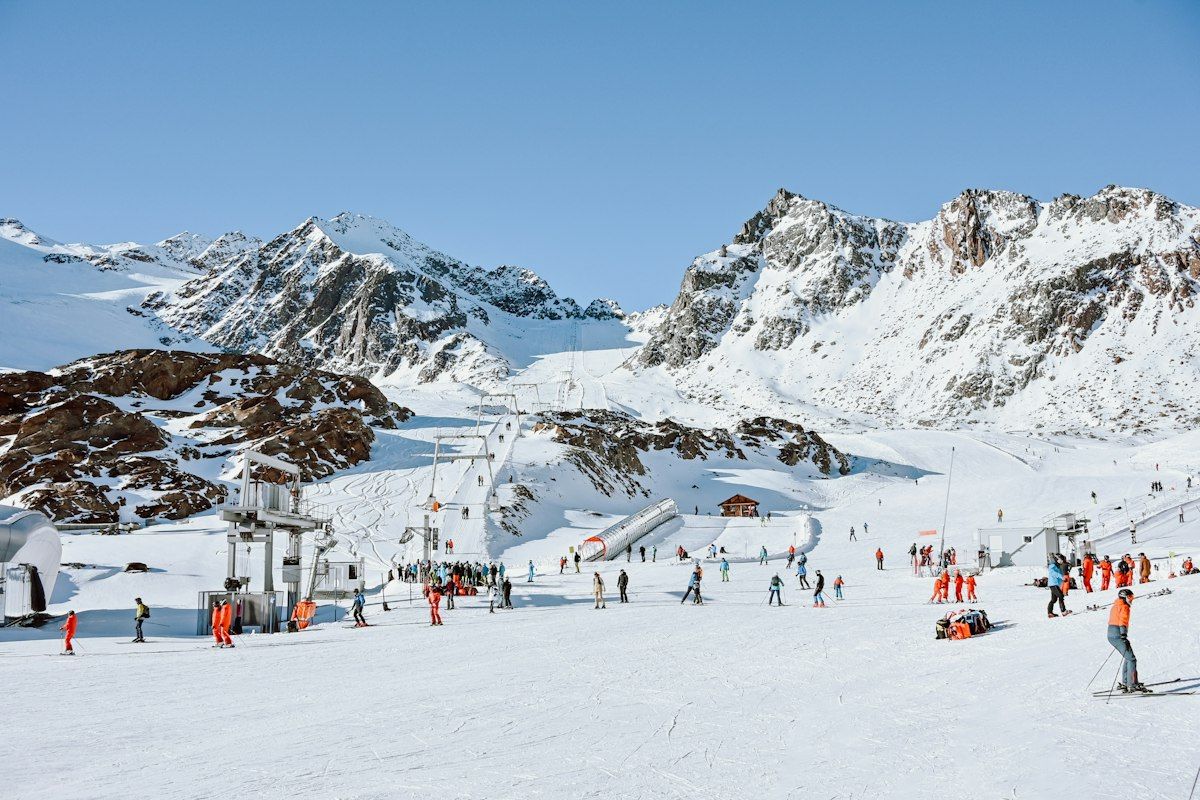
If you ski, this is the section to bookmark. The ski offering covers the French Alps — Courchevel, Tignes, Valmorel, Avoriaz, Les Deux Alpes and Alpe d'Huez — alongside the Southern Alps, the Pyrenees, and destinations in Italy, Switzerland and Austria.
Ski is a category where high-end travel discounts are traditionally hardest to come by, because hoteliers in the Alps price on scarcity: a Christmas-week chalet in Courchevel is not a commodity, and the operator knows it. A members-only channel is one of the few realistic ways to move that kind of inventory at a discount.
The same logic applies to theme parks. Disneyland Paris, Disney World, PortAventura, Puy du Fou, Futuroscope, Astérix, Europa Park, Walibi, LEGOLAND, Phantasialand and the rest appear as themed categories, usually bundled with accommodation nearby rather than sold as a bare ticket.
Membership, Payment and Protection
Registration is free, and that is the only gate. Once inside, the standard payment methods are the ones you would expect: CB, Visa and Mastercard, Apple Pay, and vacation vouchers in France. Support is advertised as available 24 hours a day, seven days a week, and there is a mobile app for browsing and booking on the move.
Two points are worth checking before you commit to anything.
You will not see a price-per-person until you have registered. This is deliberate, and it is worth remembering that the "up to 70 per cent" figure is only meaningful once you are inside and comparing against the public rate yourself.
Financial protection matters here. Voyage Privé is ATOL protected and an ABTA member in the UK market. This is not a small detail in an industry where operators fail, and it is a genuine differentiator against a lot of the flash-sale discounting that exists online. In most European markets your payment is also covered by consumer deposit and package-travel rules, but confirm the specifics for your own country at the point of booking rather than assuming.

Who It Is For — and Who It Is Not
This is a discount club for high-end travel, not a budget one, and the fit is narrower than you might expect.
It suits you if you travel two or three times a year, you are flexible on dates, you can move to a different property or a different week to get a better price, and you enjoy the hunt. It also suits you if you want the structure of a package — transfers, half-board, supervision of children — without the full-price markup of a traditional agency.
It suits you less if you are travelling with very young children and need specific facilities you cannot give up, if your dates are immovable because of work or school, or if you want to browse a full price list on a Sunday evening and decide with all the time in the world. The pressure of a five-day window is the feature, but it is also the constraint.
And be clear-eyed about one thing: opaque pricing means you cannot always compare. You will not see whether a €1,400 week is a genuinely good deal or simply the only price on offer. The member model protects the supplier, not necessarily the buyer, and the discipline of checking against the public rate before you commit is worth the extra ten minutes.
Frequently Asked Questions
Do I have to pay to join the club? No. Registration is free, and it is the price of access to the member pricing. You need an account before member-only rates become visible.
How long do the sales last? Typically five to seven days per offer, in themed batches. Some allocations sell out before the window closes.
Is the discount really up to 70 per cent? That is the advertised maximum, and the deepest reductions apply to specific hotels in specific weeks rather than across the catalogue. The honest way to use it is to compare a few member prices against the public rate for the same hotel and dates.
Is my payment protected? The company is ATOL protected and ABTA-registered in the UK. In France and other European markets, standard package-travel and deposit-protection rules apply. Always confirm the position for your country at checkout.
Can I book a hotel without a flight? Yes. Hotels, city breaks and last-minute stays are sold separately from flight-inclusive packages, which is useful if you already have your own flights or want to stay several nights in a city.
Which destinations are covered? Around ninety countries, organised by type as well as region: all-inclusive resorts, guided tours and circuits, city breaks, ski holidays, theme parks, cruises, and flights-plus-hotels packages. Italy, Greece, Spain, Morocco, Thailand, the Maldives, Egypt, Croatia, Portugal, Japan and the United States all appear regularly.
Do they have an app? Yes, on both the App Store and Google Play, alongside round-the-clock customer support.
The Practical Takeaway
The reason this model works is structural rather than promotional. Voyage Privé negotiated inventory that cannot be shown publicly, put it behind a free membership wall, and let the scarcity do the work. For a company founded in Aix-en-Provence in 2006 that now runs nine country sites and tens of millions of members, the approach has held up for two decades.
My advice is not to treat it as a place to find a specific hotel on a specific week. Treat it as a place to watch, join once, and check when the destination you care about drops. The people who do well on it are the ones who know what a good price looks like for their usual trip and can move on it within a few days.
If that describes you, register for the club and browse the current sales. If your dates are fixed and your hotel list is non-negotiable, a conventional agency will still serve you better — and there is no shame in that.
This article contains affiliate links. If you make a purchase through these links, I may earn a commission at no additional cost to you. This helps support the blog and allows me to keep producing quality content. Thank you for your support!